
Reviewed · GOLDEN CIRCLE TOURS
German-speaking Private Golden Circle Tour
Iceland’s Golden Circle is more than three famous sights. This private route adds the 2008 earthquake fissure in Hveragerði, the turquoise waters of Brúarfoss, and a farm ice cream stop to the usual Gullfoss, Geysir, and Þingvellir circuit. A German-speaking local guide, including guides named Andy and Joelina, handles the driving and explains the country as you go.
I like the small private group, which gives you room for questions and lets the guide keep the day relaxed. I also like the well-spaced stops, from the 25-meter eruptions at Strokkur to the farm-made ice cream at Efstidalur II. The main drawback is simple: you spend a good part of the eight-hour day in the vehicle, and lunch is not included.
Key points to know before booking
- Private group of up to five: You share the air-conditioned vehicle only with your own party.
- German-speaking guiding: Expect explanations about Iceland’s sights, people, earthquakes, geology, and daily life.
- More than the standard Golden Circle: Hveragerði, Brúarfoss, Laugarvatn, and Efstidalur II add variety to the classic route.
- About eight hours on the road: The day runs from seven to nine hours, with plenty of driving between stops.
- Price works best for a full group: The $1,260.93 cost is per group, not per person, so five people pay far less each than two.
- Lunch is your responsibility: Snacks and lunch are not included, so plan ahead for food during the day.
Why this private Golden Circle route feels different
The classic Golden Circle already offers three major Iceland sights: Þingvellir National Park, the Geysir geothermal area, and Gullfoss waterfall. This tour adds several smaller stops that help explain how Iceland works beneath your feet and how people live with that geology.
You begin in Reykjavík at Harpa Concert Hall and Conference Centre, with pickup offered. The exact tour lasts roughly seven to nine hours, usually around eight. Since the tour is private, only your group participates, a useful feature if you want to ask questions in German, pause for photos, or keep the day less hurried.
The guiding is a major part of the experience. Andy receives especially warm praise for explaining clearly without overwhelming the group, while Joelina is described as both informative and fun. That balance matters in Iceland, where geology can quickly turn into a lecture packed with unfamiliar names. A good guide gives you enough context to understand what you see, then lets the scenery do its work.
Other ways to see the Golden Circle from Reykjavik:
- Reykjavik: Golden Circle Full-Day Tour with Kerid Crater
★ 4.8 · 24,485 reviews - From Reykjavik: Golden Circle, Kerid, & Secret Lagoon Tour
★ 4.8 · 6,009 reviews - Small-Group Golden Circle, Blue Lagoon with Ticket & Kerid Crater
★ 5.0 · 5,631 reviews
Hveragerði and the earthquake fissure
Your first stop is Hveragerði, a town known for its greenhouses and geothermal heat. At the local shopping center, you can see a fissure formed during the magnitude 6.2 earthquake that struck the area in 2008.
This is a clever opening stop because it makes Iceland’s earthquake activity feel immediate. Instead of only hearing that the island sits on active geological boundaries, you see the damage in a built-up place. A video shows the earthquake’s effects, and an earthquake simulator is available for an extra charge.
The stop lasts about 20 minutes, and admission is free. The simulator costs extra, so you can decide on the spot if it appeals to you. If you prefer scenery over interactive displays, the fissure and video still provide a useful introduction without requiring additional spending.
Kerið crater and a 6,500-year-old volcanic bowl
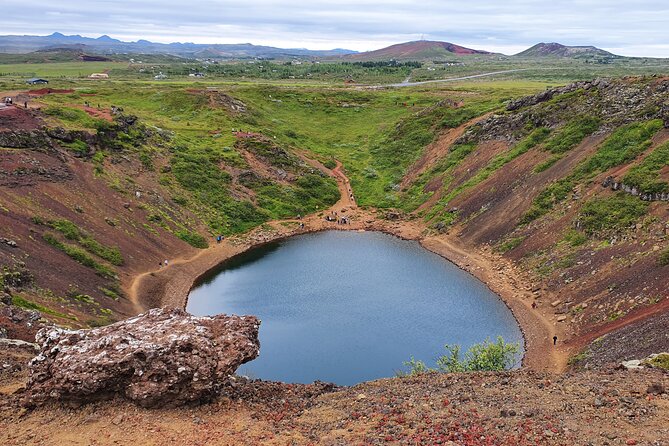
Kerið is a red volcanic crater about 55 meters deep, formed during an eruption roughly 6,500 years ago. The crater’s shape and exposed rock make it one of the most striking geological stops on the route.
You have about 25 minutes here, with admission included. That included entry is a small but welcome detail, since some Icelandic sights charge separately. The stop is fairly brief, so you should expect time to look around and take in the crater rather than a long walk.
Kerið also breaks up the drive before the major waterfall and geothermal stops. Its appeal is visual and geological: you can see the structure of an old volcanic site in a compact area, without needing a strenuous hike.
Gullfoss, where the Hvítá River drops twice
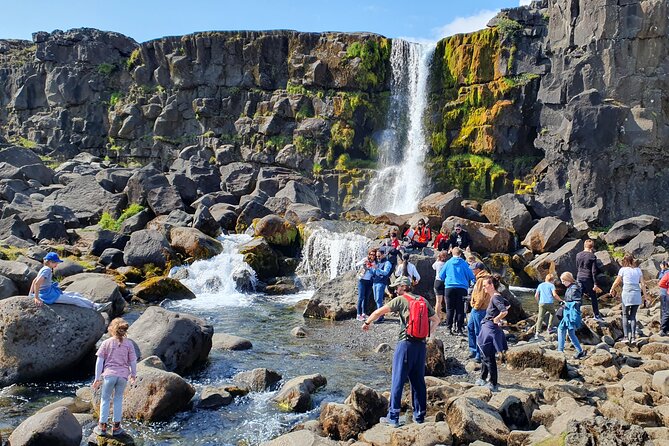
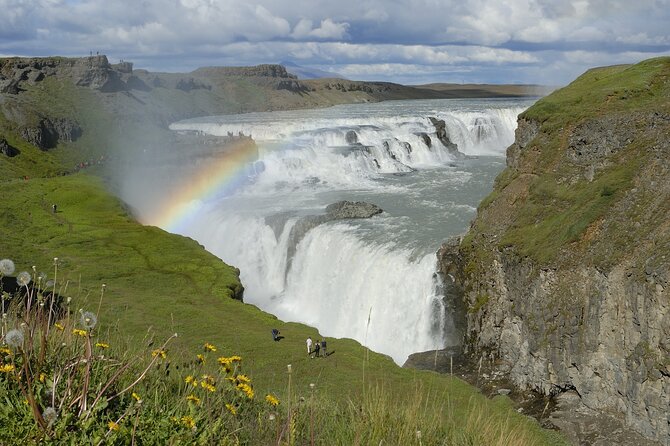
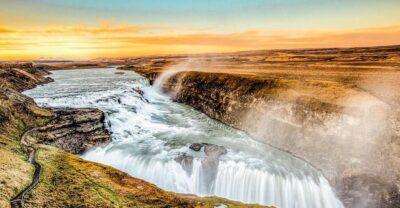
Gullfoss is one of Iceland’s great waterfalls, and the 30-minute stop gives you time to reach the viewing areas and watch the Hvítá River plunge in two stages into a narrow gorge.
The scale comes from the combination of water, rock, and sound. Gullfoss is not a delicate trickle. The river drops with force, and the gorge makes the waterfall feel larger than a single viewpoint can show.
Thirty minutes is enough for a focused visit, though you may wish for longer if the weather is dramatic or photography is your priority. The admission is free, and the tour keeps moving afterward, so wear shoes suitable for walking near wet ground. The provided information does not specify the exact walking surface, so sensible outdoor footwear is a good idea.
A few more things to do in Reykjavik worth a look
- Private South Coast Fire and Ice: Glacier viewpoint & Lava Show
★ 5.0 · 451 reviews - Private Golden Circle, Sky Lagoon and Friðheimar Greenhouse Lunch
★ 5.0 · 381 reviews - Blue Lagoon Entry Ticket with Optional Private or Shared Transfer
★ 4.5 · 343 reviews - Keflavik International Airport Private Transfer To/From Reykjavik
★ 4.5 · 270 reviews
Geysir and Strokkur’s regular eruptions
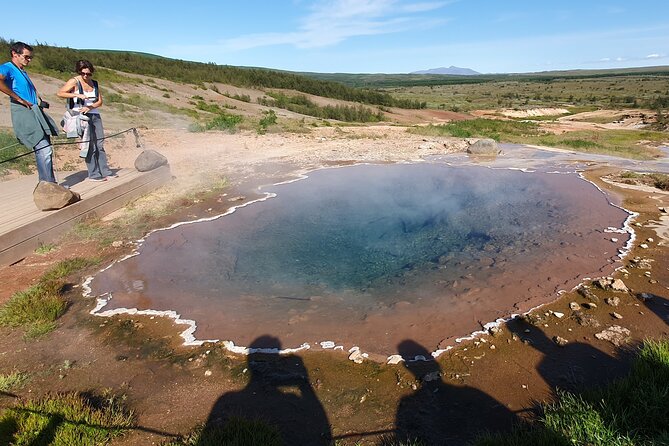
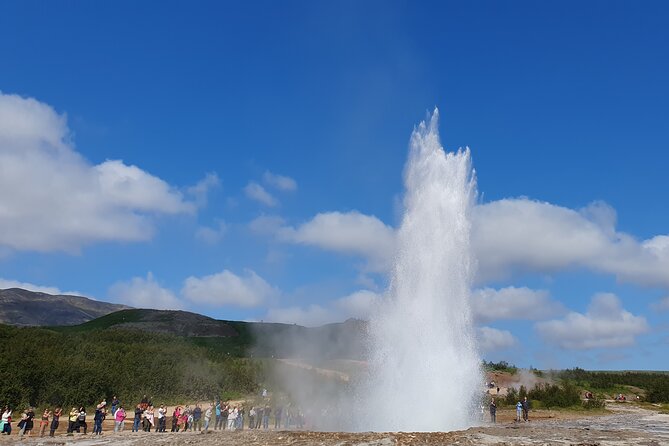
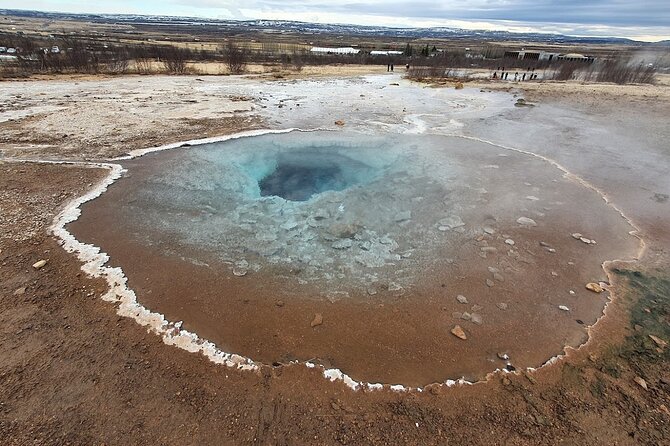
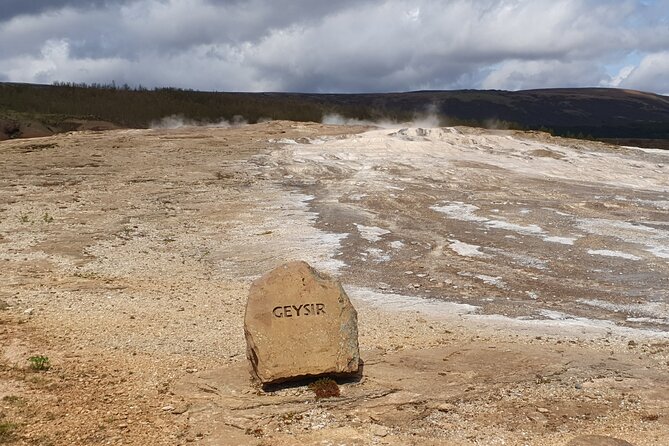
At the Haukadalur geothermal area, you visit the springs that gave the English language the word geyser. The original Geysir is rarely active now, but Strokkur erupts every five to ten minutes, sending water as high as 25 meters.
The 45-minute stop is one of the better-timed parts of the day. You have enough time to see several eruptions, examine other hot springs, and wait without feeling that you must sprint back to the vehicle after one burst.
Strokkur is unpredictable in its exact timing, but its frequent eruptions make this a reliable stop. Keep your attention on the marked geothermal area and follow local directions. Iceland’s hot water is not just warm, it can be dangerous.
The geothermal area also gives you a change of pace after Gullfoss. At the waterfall, your focus is on moving water and a gorge. Here, you watch the ground bubble, steam, and suddenly send a column of water skyward.
Brúarfoss and its blue-green river
Brúarfoss is a smaller waterfall with a very different character from Gullfoss. Its water is known for an intense blue-green color created by mineral-rich springs in the river. The falls move over several levels of lava rock, producing a more detailed scene than a single broad plunge.
The scheduled stop is about 15 minutes. That is enough for a look and photographs, but it is not a long visit. The short timing may suit you if you want to see many parts of the Golden Circle in one day. If you prefer slow walks and extended time at each waterfall, this tour may feel brisk.
Brúarfoss is valuable because it adds contrast. You see one of Iceland’s most powerful waterfalls at Gullfoss, then a smaller waterfall recognized for its unusual water color. The two stops show how varied Icelandic water features can be within the same region.
Laugarvatn and bread baked with geothermal heat
At Lake Laugarvatn, the group stops at the lakeshore for about 10 minutes. Several hot springs lie around the lake, and some are used to bake bread.
This is a short stop, but it offers a practical link between Iceland’s geology and everyday life. Geothermal heat is not only something to photograph. It can also be part of cooking and local food traditions.
Do not expect a full food demonstration or meal from the information provided. The stop is mainly for viewing the hot springs and hearing about their use. Since lunch and snacks are not included, this is not a substitute for planning a proper meal.
Þingvellir and the foundations of Iceland
Þingvellir National Park is the final major sightseeing stop. The Alþing, Iceland’s parliament, was founded here in 930, making the site important to the country’s political story as well as its geology.
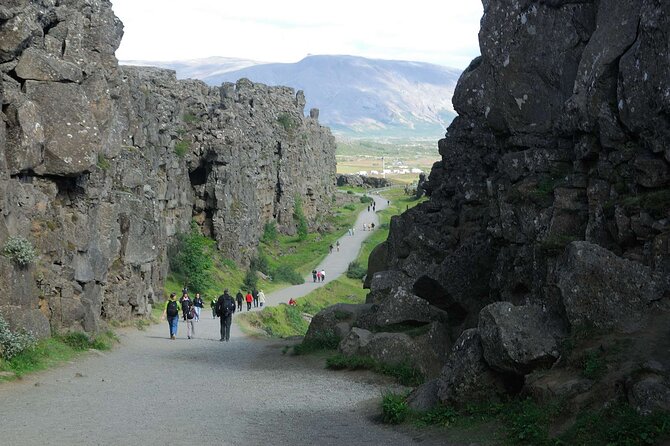
You walk through the Almannagjá gorge, formed by continental drift, and visit Öxarárfoss waterfall. The 50-minute stop gives you the most substantial walking time of the day.
Þingvellir works best when you understand that two stories meet here. The gorge shows the movement of the Earth’s crust, while the assembly site connects the area to Iceland’s national development. You are not simply looking at a crack in the rock. You are walking through a place where Icelanders gathered to debate laws and settle disputes over many centuries.
The walking portion makes comfortable footwear important. The tour description says the gorge is explored on foot, but it does not give a precise route length or surface details. If mobility is a concern, ask the provider for current guidance before booking.
Efstidalur II and the case for Icelandic ice cream
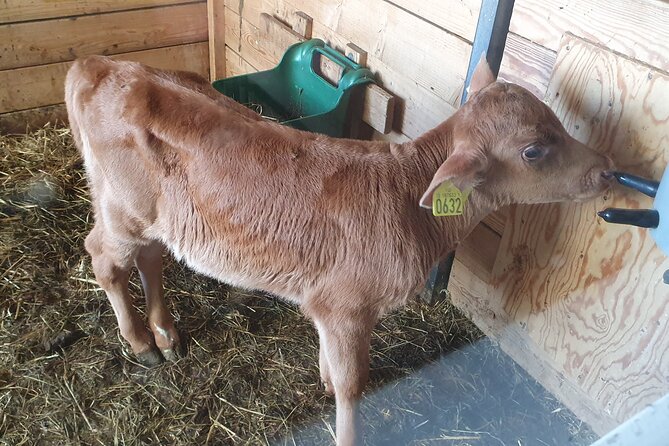
The final stop is Efstidalur II, a farm with an ice cream factory using milk from its own cows. You have about 20 minutes to try the ice cream and see why it is popular in Iceland at almost any hour.
This stop adds a welcome human touch after a day of waterfalls, volcanic rock, and geothermal activity. You are not only looking at nature from a viewpoint. You are seeing a working farm turn its own milk into a local product.
The ice cream is not included in the tour price, and the supplied details do not state how much it costs. Still, it is an easy optional purchase, and the timing makes sense near the end of a long day. It also gives children and anyone less excited by geology something concrete to look forward to.
How the timing affects your day
The tour is advertised as about seven to nine hours, with eight hours being the practical expectation. The stops add up to a little under four hours, which means the remaining time is spent driving between locations.
That is normal for the Golden Circle, but you should set your expectations correctly. This is not a walking tour with short transfers. It is a full-day road trip through a broad part of southern Iceland.
The private format helps make the driving more pleasant. You are not sharing the vehicle with a large busload, and you can use the time to ask the guide about Icelandic life, not only the next waterfall. Past feedback gives special credit to the careful timing, with groups returning on schedule after a full day out.
The tour ends back at the meeting point. Harpa Concert Hall and Conference Centre is the stated start and end location at Austurbakki 2 in Reykjavík. Pickup is offered, but you should confirm the exact pickup arrangement when booking, especially if you are staying somewhere other than the stated meeting point.
Price, food, and private-tour value
The price is $1,260.93 per group of up to five people. That works out to about $252 per person if five people share the vehicle. For two people, the per-person cost is much higher, but you are paying for a private vehicle, a German-speaking guide, and the ability to keep the day within your own group.
The value depends heavily on group size. A full group of five gets a strong price comparison against five individual seats on a small-group excursion. A couple may still prefer this tour if German-language guiding and privacy matter more than the lowest possible cost.
The vehicle is air-conditioned. No lunch or snacks are included, and the schedule includes several short stops rather than a stated restaurant meal. Bring money for optional purchases such as the earthquake simulator and ice cream, and plan how you will handle lunch during the day.
Who will get the most from this tour
I would recommend this experience to a German-speaking family, couple, or group of friends that wants a private day with a local guide. It is especially useful if you enjoy asking questions and want explanations that go beyond memorizing the names of Iceland’s sights.
It also suits anyone arriving by ship or working with a fixed schedule. The provided feedback includes a group picked up at a port terminal and returned on time, while the stated meeting point is Harpa. Confirm your own pickup details, but the timing record is encouraging for a day connected to a ship schedule.
This tour is less suitable if you want long hikes, a slow pace, or a meal included. The day covers many stops, so its strength is variety rather than extended time at one place.
Should you book the German-speaking Golden Circle tour?
Book it if you want the classic Golden Circle with useful extras: the Hveragerði earthquake site, Brúarfoss, Laugarvatn, and farm-made ice cream. The strongest reasons are the private format, German-speaking guidance, carefully timed stops, and the chance to ask questions throughout the day.
Think twice if you are traveling with fewer than five people and are focused only on price, or if you dislike spending several hours in a vehicle. Also remember that poor weather can lead to a different date or a full refund, while cancellations made less than 24 hours before departure are not refunded.
For a full German-speaking group that wants a broad first look at Iceland, this is a well-balanced choice. You get major sights, smaller local details, and a guide who can turn the long drives into part of the experience.
FAQ
How long does the German-speaking Golden Circle tour last?
The tour lasts approximately seven to nine hours, with the usual duration described as about eight hours.
Where does the tour start?
The stated meeting point is Harpa Concert Hall and Conference Centre at Austurbakki 2, 101 Reykjavík.
Where does the tour end?
The activity ends back at the meeting point in Reykjavík.
Is pickup available?
Pickup is offered. Confirm the exact pickup details when booking, since the stated meeting point is Harpa Concert Hall and Conference Centre.
How many people can join the private tour?
The private tour is for one group of up to five people.
Is the tour conducted in German?
Yes. The tour is led by a German-speaking local guide.
Is lunch included?
No. Lunch and snacks are not included.
Is admission to Kerið crater included?
Yes. Admission to Kerið crater is included.
Does the tour visit Strokkur geyser?
Yes. At the Geysir geothermal area, you can see Strokkur erupt roughly every five to ten minutes, with eruptions reaching up to 25 meters.
Can I cancel for a full refund?
Yes, if you cancel at least 24 hours before the experience’s start time. Cancellations made less than 24 hours before the start time are not refunded. If poor weather causes the tour to be canceled, you will be offered another date or a full refund.
Just added in Reykjavik
- Reykjavik: Whale and Puffin Watching RIB Boat Tour★ 4.6 · 179 reviews
- Reykjavik: Whale Watching Express★ 4.3 · 227 reviews
- Reykjavik: Whale Watching & Lava Show★ 5.0 · 4 reviews
- Reykjavik: Whale & Marine Adventure Tour★ 4.3 · 71 reviews
- From Reykjavík: Viking Horseback Tour in Hafnarfjörður★ 4.9 · 112 reviews
- Reykjavík: Horse Riding Tours★ 4.9 · 127 reviews
- Luxury Private Transfer from Reykjavik to Keflavik Airport★ 5.0 · 9 reviews
- Whales Of Iceland Admission Ticket★ 4.0 · 239 reviews
Golden Circle Tours, compared.
Golden Circle Full-Day Tour with Kerid Crater
Read our review →
Small-Group Golden Circle, Blue Lagoon with Ticket & Kerid Crater
Read our review →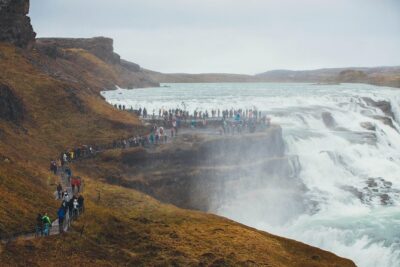
Golden Circle Classic Day Tour from Reykjavik
Read our review →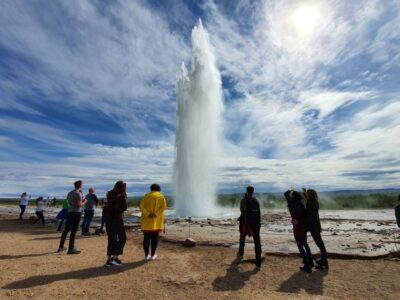
Golden Circle, Kerid Crater, & Blue Lagoon Tour
Read our review →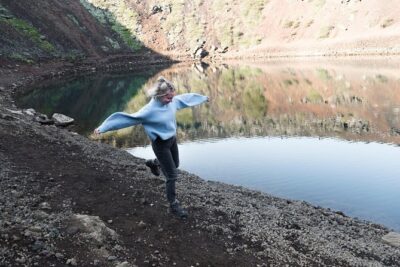
Golden Circle with Kerid Volcanic Crater Day Tour from Reykjavik
Read our review →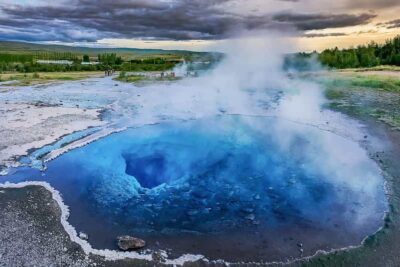

Small-group Golden Circle Classic Tour from Reykjavik
Read our review →Browse the lists this tour appears in