
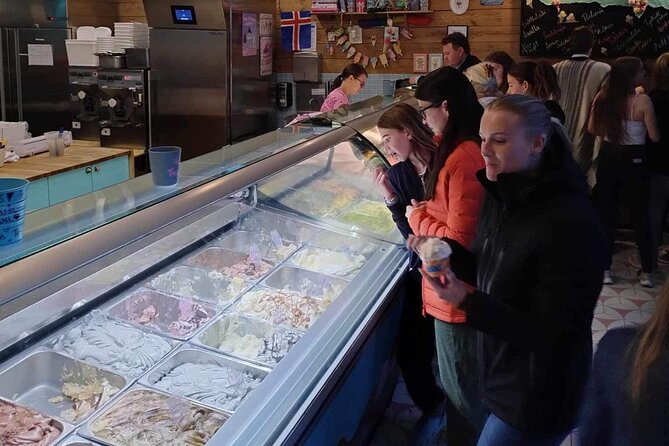
Reviewed · REYKJAVIK WALKING & FOOD TOURS
Reykjavik Food Tour – Old Harbor Walking Tour
Reykjavik’s Old Harbor is a fine place to understand Iceland through food. This three-hour walk takes you through Grandi, where local eateries, museums, fishing businesses, and waterfront history come together. You’ll taste contemporary Icelandic fare, not just dare-yourself specialties, while learning why fish still matters so much to the country.
I like the small maximum of eight people, which should make it easier to ask questions and keep the pace relaxed. I also like the mix of food and context: guides such as Sabrina connect each stop with Icelandic culture, daily life, sustainability, fish farming, and whaling.
The main consideration is value. At $123 per person, this is not a cheap way to grab lunch, and the exact foods are not listed in advance. You’re paying for several tastings, a guide, and the local background, so it suits curious eaters more than anyone simply looking for a filling meal.
Key points at a glance
- Six or more tasting stops: Visit at least six restaurants or street food vendors around Grandi.
- Modern Icelandic food: The focus is on what people eat today, rather than a checklist of extreme traditional foods.
- Fishing shapes the route: The Maritime Museum and Iceland Ocean Cluster add useful context to the tastings.
- Small private group: Only your group participates, with a maximum of eight people.
- About three hours: The walk begins at Seljavegur 2 and ends near Grandagarður 21, about three minutes from the start.
- Afternoon timing: The supplied tour details list a 3:00 pm start, though the experience is also described as offering morning or afternoon choices.
Why Grandi makes a good food-tour setting

Grandi is Reykjavik’s Old Harbor district, and it gives this experience a stronger sense of place than a restaurant-only tasting. You move through an area tied to fishing, trade, museums, and newer food businesses rather than staying in one central dining room.
That setting matters. Icelandic food makes more sense when you see the harbor district that helped shape it. Fish is not simply a menu item here. It has supported settlement, jobs, exports, and the wider economy for centuries.
The route also gives you a look at how Reykjavik has changed. Older fishing traditions sit beside museums, visitor attractions, and modern eateries. The result is a food walk that deals with both Iceland’s past and its present.
The walking itself is not presented as strenuous. One review describes the tour as involving limited walking between several eateries, which is useful if you want food sightseeing without a long city march. Still, you should be ready to spend about three hours on your feet and moving between stops.
More walking and eating in Reykjavik:
- Reykjavík Small group Walking Tour – by CityWalk
★ 5.0 · 5,076 reviews - Reykjavik: Guided Foodie Walking Tour with 6 Tastings
★ 4.9 · 1,645 reviews - Reykjavik Walking Tour – Walk with a Viking
★ 4.5 · 1,018 reviews
Six or more stops, with food as the main event
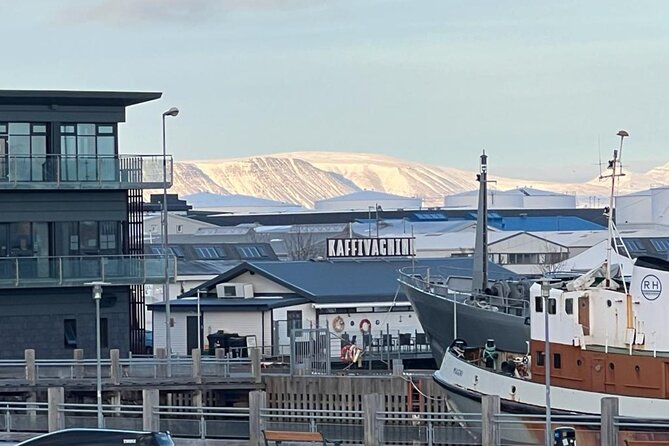
The central promise is a series of tastings at at least six different restaurants or street food vendors. The route breaks the food into several stops, with one or two local eateries connected to each part of the Old Harbor visit.
That format is useful because you get range. Instead of committing to one full meal, you can sample different styles of Icelandic food and drinks while learning how they fit into local life. You may also find the portions are designed for tasting rather than replacing a large dinner, so plan the rest of your day accordingly.
The exact dishes are not specified, and that is worth noting before you book. You should not reserve this expecting a fixed menu of named specialties. The strength is the chance to try what the local stops offer on the day, guided by the route and the host.
The food emphasis is also more modern than theatrical. The experience includes Icelandic foods that people actually enjoy now, rather than treating fermented shark or other famous traditional items as the whole story. That makes the tour a better fit if you want a realistic sense of local eating habits.
You’ll sample a variety of foods and drinks, but the supplied details do not promise particular dietary substitutions. If you have food restrictions, ask the provider before booking rather than assuming every stop can accommodate you.
The Saga Museum area sets the scene
The first part of the route takes you through the area around the Saga Museum. Admission to the museum itself is listed as free for the tour, but the description presents it as a point of interest along the walk rather than a scheduled museum visit.
You’ll stop at one or two local eateries in this part of Grandi. The value here comes from having the guide explain the area while you begin tasting, rather than rushing straight to a plate with no sense of place.
The Saga Museum points toward Iceland’s settlement and medieval stories. You should not expect a full museum tour during this food experience, but passing it gives the guide a natural opening to explain how Iceland’s older traditions still shape national identity.
This first section is also a useful warm-up. You can learn the pace of the tour, get comfortable with the small group, and decide how much you want to ask about unfamiliar foods. A guide who takes an interest in your questions can make a major difference here, and Sabrina is specifically praised in the supplied feedback for engaging with the group and explaining Icelandic food and culture.
Aurora Reykjavik adds a visual stop
The next section brings you near Aurora Reykjavik, the Northern Lights Center. Again, the center is listed as a landmark along the route, with one or two tasting stops in the area, not as a guaranteed extended visit inside the attraction.
This is a nice change of subject from food. The tour uses nearby sights to explain Iceland as a country, its culture, and daily life. That keeps the walk from feeling like a string of unrelated restaurant visits.
You should see this stop as context rather than a separate attraction ticket. The stated admission is free, but the experience is built around passing points of interest and eating at local businesses. If you want a full visit to the Northern Lights Center, set aside another time for it.
The combination of food and place is one of the tour’s strongest features. You are not only told that Iceland has a fishing culture. You are shown parts of Reykjavik where that culture remains visible, then given food that helps make the explanation concrete.
A few more things to do in Reykjavik worth a look
- Reykjavik Food Walk – Local Foodie Adventure in Iceland
★ 5.0 · 18,952 reviews - Reykjavik Food Lovers Tour – Icelandic Traditional Food
★ 5.0 · 1,012 reviews - Reykjavik: Icelandic Food Tour
★ 4.7 · 407 reviews - Reykjavik: Eimverk Distillery Guided Tour with Tasting
★ 4.9 · 352 reviews
The Maritime Museum explains Iceland’s fish-first table
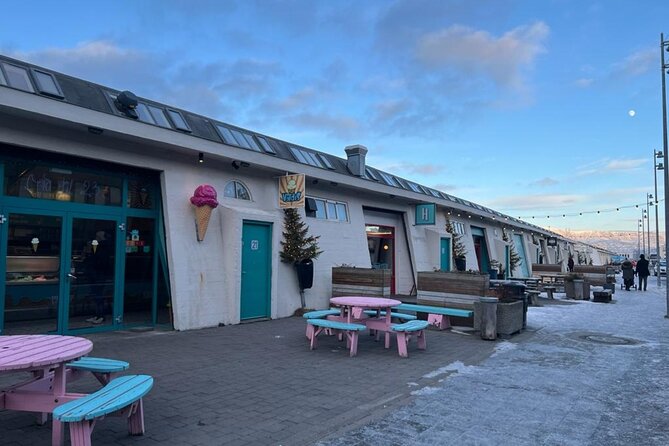
Fish receives its clearest treatment around the Reykjavik Maritime Museum. The tour uses this area to explain the role of fishing from the time of settlement onward, while adding another one or two food stops.
This is more useful than a short comment about cod on a menu. Fishing has been a main pillar of the Icelandic economy, and the food walk gives you a way to connect that economic fact with what you taste.
The museum itself is listed as free in the itinerary, but the description does not say that you spend a set amount of time touring its galleries. The scheduled portion is about thirty minutes, including the surrounding food stop and commentary. If museum exhibits are a priority, ask how much time the group will have on your date.
I like this part because it gives the meal a reason. You begin to see why seafood appears so often in Icelandic cooking and why fishing has such a large place in national conversations. It also helps explain why Icelandic food cannot be separated neatly from the sea.
Iceland Ocean Cluster brings the story into the present
The final listed stop is Iceland Ocean Cluster, where the conversation shifts toward current fishing issues. The guide discusses Iceland’s role in sustainability, fish farms, and whaling, along with the continuing importance of fishing to the economy.
This is a valuable addition. A food tour can easily romanticize old customs, but this section acknowledges that the seafood industry faces hard questions today. You get a more useful picture of Iceland when the guide links what is on your plate with how food is sourced and how the industry is managed.
There is another one or two tasting stops in this part of the route. By now, the food should feel tied together by a clear theme rather than presented as random samples. You are learning how Icelandic eating has changed while still depending heavily on the sea.
The discussion may also suit you if you care about food ethics. Sustainability, fish farms, and whaling are not small side issues in Iceland. The tour does not promise a debate or a formal lecture, but it does make room for these subjects between tastings.
Sabrina and the value of a small group
The guide can make or break a food tour, and Sabrina is the only guide name supplied for this experience. The feedback specifically highlights her enthusiasm, personal attention, and ability to explain food alongside Icelandic culture.
That matters in a group limited to eight people. A small party gives you a better chance to ask why a dish is served in a certain way, how modern food differs from older traditions, or what locals commonly eat. It also avoids the stop-and-start feel that can come with a large food crowd.
The experience is described as private, meaning only your group participates. At the same time, the maximum group size is eight, so you should confirm the exact setup when booking if private use is important to you.
The tone sounds friendly and informative rather than formal. You are not signing up for a cooking class or a museum lecture. You are joining a host for a moving meal, with stories added at each stop.
Is $123 a fair price?
At $123 per person, this tour costs more than simply choosing a few inexpensive bites around Reykjavik. The price makes more sense if you want several tastings, a guide, local context, and a carefully planned route in one booking.
You are also paying for the guide’s ability to connect separate subjects: Old Harbor landmarks, Icelandic food, the fishing economy, modern sustainability, and everyday culture. That information can be hard to assemble on your own during a short visit.
Still, value depends on appetite and priorities. If you mainly want a large meal, the price may feel high because food tours divide the experience into samples. If you enjoy trying several things and prefer a local explanation to eating alone, the cost is easier to justify.
The route includes free admission at the listed sights, but the appeal is not free entry to museums. It is the combination of neighborhood walking, food, and interpretation. Make sure you understand that distinction before you book.
Timing, meeting points, and practical planning

The stated meeting point is Seljavegur 2 in Reykjavik, with the tour ending at Grandagarður 21. You finish about a three-minute walk from where you began, which makes the route simple to pair with other plans in the Old Harbor.
The supplied booking details list a 3:00 pm start. The tour is also described as having morning or afternoon options, so confirm the actual departure time offered for your date. A three-hour afternoon outing can work well as a late lunch or early dinner, but you may not want to schedule another fixed activity immediately afterward.
The tour uses a mobile ticket, and confirmation is sent within 48 hours, subject to availability. It is near public transportation, and most people can participate. You should still wear shoes and clothing suited to Reykjavik weather, since the experience takes place outdoors between stops.
Weather matters here. If poor conditions force a cancellation, you are offered another date or a full refund. The experience also requires a minimum number of participants, so a cancellation is possible if that number is not reached.
Free cancellation is available up to 24 hours before the start time. Changes or cancellations inside that window are not refunded, so keep the local cut-off time in mind when making plans.
Who should book this Old Harbor food walk?
I would choose this tour if you want an introduction to Icelandic food that feels connected to real life. It suits first-time visitors, curious eaters, and anyone who likes a guide to explain why a dish matters instead of simply handing it over.
It is also a good option if your schedule is tight. In about three hours, you get food, a neighborhood walk, several landmarks, and an overview of fishing’s role in Iceland. The small group makes it more personal than a large sightseeing outing.
You may want another option if you need a guaranteed menu, have strict dietary requirements that have not been confirmed, or want long interior visits at the museums and attractions along the way. This is primarily a guided food walk, not a museum tour.
Should you book it?
Book this Old Harbor tour if you want modern Icelandic food, several small tastings, and a clear explanation of how fishing shapes the country. The route through Grandi gives the food a setting, while the stops at the Maritime Museum and Iceland Ocean Cluster add useful present-day questions about the seafood industry.
Skip it if $123 feels too high for tasting portions or if you need every dish confirmed in advance. For most visitors who value local stories, a small group, and more than a simple meal, it offers a practical way to get oriented in Reykjavik.
FAQ
How long does the Reykjavik food tour last?
The tour lasts approximately three hours.
Where does the tour begin?
The meeting point is Seljavegur 2, 101 Reykjavik, Iceland.
Where does the tour end?
The tour ends at Grandagarður 21, 101 Reykjavik, about a three-minute walk from the starting point.
What time does the tour start?
The supplied tour details list a 3:00 pm start. The experience is also described as offering morning or afternoon choices, so confirm the available time when booking.
How many food stops are included?
You will visit at least six different restaurants or street food vendors. The route lists one or two local eateries in each of four Old Harbor areas.
Is the tour private?
Yes. Only your group participates, and the group has a maximum of eight people.
Can I cancel for a refund?
Yes. You can cancel at least 24 hours before the start time for a full refund. Cancellations or changes made less than 24 hours before the start time are not refunded.
Just added in Reykjavik
- Reykjavik: Whale and Puffin Watching RIB Boat Tour★ 4.6 · 179 reviews
- Reykjavik: Whale Watching & Lava Show★ 5.0 · 4 reviews
- Reykjavik: Whale Watching Express★ 4.3 · 227 reviews
- Reykjavik: Whale & Marine Adventure Tour★ 4.3 · 71 reviews
- From Reykjavík: Viking Horseback Tour in Hafnarfjörður★ 4.9 · 112 reviews
- Reykjavík: Horse Riding Tours★ 4.9 · 127 reviews
- Luxury Private Transfer from Reykjavik to Keflavik Airport★ 5.0 · 9 reviews
- Whales Of Iceland Admission Ticket★ 4.0 · 239 reviews
Reykjavik Walking & Food Tours, compared.
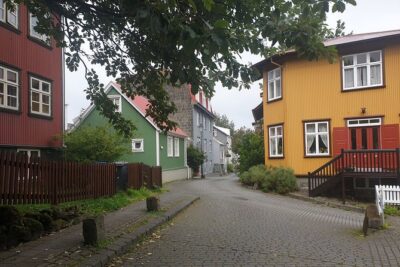
Reykjavík Small group Walking Tour – by CityWalk
Read our review →
Reykjavik Folklore Walking Tour: Meet the Elves, Trolls & Ghosts of Iceland
Read our review →

Funky History Walking Tour in Reykjavik – With local storyteller
Read our review →
City Walking tour in Small Group with Local Guide
Read our review →Browse the lists this tour appears in