
Reviewed · ICE CAVE TOURS
Skaftafell: Blue Ice Cave & Glacier Hike on Vatnajökull
The best part of this tour is that you do not just look at Vatnajökull from a roadside viewpoint. You walk on Falljökull, pass ridges and crevasses, and enter a real blue ice cave selected for current safety conditions. The cave may be small, but the glacier around it is the main event.
I like the small groups of up to 12 and the careful gear setup. Guides such as Ola, James, Albin, and Jacek have been praised for clear instruction, good humor, and calm handling of first-time hikers. One consideration: the cave changes constantly, so it may be a short tunnel or modest opening rather than the grand cavern shown in a brochure.
Key points to know before booking
- A 2.5-hour glacier outing: Most of your time is spent walking across Falljökull, not sitting on the bus.
- A changing natural cave: The guide chooses the cave based on current conditions, so its size and shape can vary.
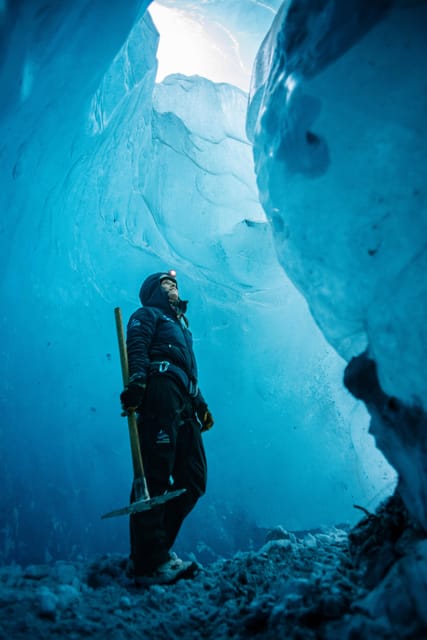
- Safety gear is supplied: You receive glacier crampons, a helmet, harness, and walking ice axe.
- Small groups matter: A maximum of 12 people per guide allows time for questions, photos, and steady pacing.
- Proper boots are essential: Ankle-support hiking boots are mandatory, with rental boots and outerwear available for a fee.
- Good value for an active half-day: At $163, the price covers transport, guiding, and technical glacier equipment.
Why Falljökull is worth your time
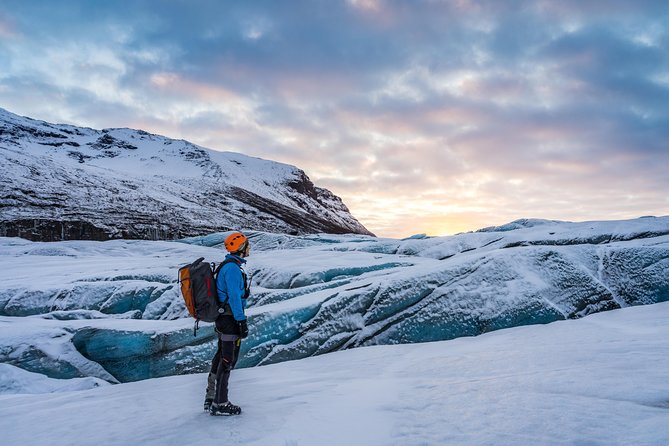
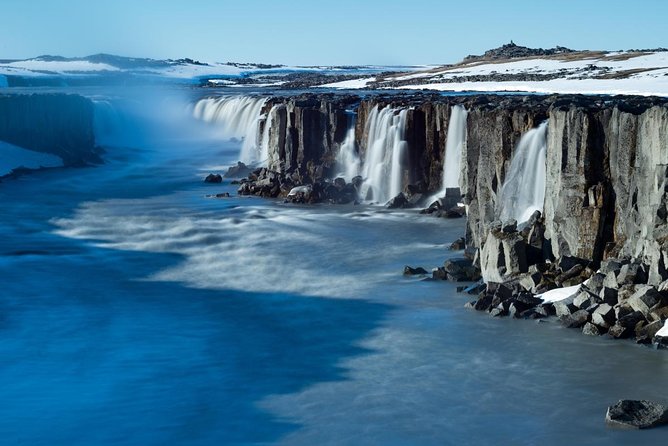
Skaftafell is one of Iceland’s best bases for seeing ice up close. You are in Vatnajökull National Park, home to Vatnajökull, the largest glacier in Europe. From a distance, a glacier can look like a white wall or a frozen river. On foot, it becomes a moving world of blue ice, cracks, shafts, ridges, and changing textures.
Falljökull is especially suited to a guided walk because the route is not something you should attempt alone. Ice can hide holes, crevasses can open without warning, and the safest route changes with weather and glacier movement. Your guide handles route choices while you focus on placing each foot securely.
I also like the scale of the experience. Four hours is long enough to feel that you have done something real, but short enough to fit into a driving day along Iceland’s south coast. You get a proper glacier walk without committing to a full-day expedition.
The tour has a 4.7 rating from 643 bookings, and the strongest pattern is clear: people praise the guides, the sense of safety, and the chance to walk on the glacier. That is useful because the quality of a glacier outing depends heavily on the guide. The ice is spectacular, but a good guide turns it into a safe and understandable experience.
More Glacier Hikes in Skaftafell
- Skaftafell National Park: Falljokull Glacier Easy Hike
★ 4.7 · 1,370 reviews - Skaftafell National Park: Falljokull Glacier Advanced Hike
★ 4.8 · 1,083 reviews - Skaftafell: Blue Ice Glacier Hike on Vatnajökull
★ 4.7 · 1,045 reviews
Starting at Skaftafell Base Camp
Your meeting point is the Arctic Adventures hut near the Skaftafell visitor centre. Allow time to find the hut and sort out parking. Two nearby car parks have caused some confusion, but both are about a minute from the base camp.
At the hut, you get ready for the glacier. The operator supplies crampons, helmets, harnesses, and walking ice axes. You are responsible for warm, waterproof clothing and suitable boots unless you rent them. The staff checks the equipment before you leave, which is especially helpful if you have never used crampons before.
The minimum age is eight, and the minimum shoe size is EU 35. Crampons fit EU sizes 35 through 50, so check this before paying for the activity. Open-toed shoes, high heels, and ordinary soft footwear are not suitable.
Your guide will explain how to walk with crampons and how to use the ice axe. Do not worry if this is your first time on ice. Several guides have been praised for helping beginners settle in, and the reported pace is relaxed rather than a race. Still, you need to be able to walk over uneven ground for around two and a half hours.
The 20-minute ride to the glacier
The drive from Skaftafell to the glacier takes about 20 minutes in a 4×4 bus. This short transfer saves your legs for the part that matters and gets you close to the foot of Falljökull.
It also gives the guide a chance to explain the day ahead and point out scenery along the route. The transfer is practical rather than scenic transport for its own sake, but it adds to the sense that you are leaving the marked park paths and heading into rougher country.
Once you arrive, the guide checks the group again before stepping onto the ice. This is where the group size becomes important. With no more than 12 people per guide, the guide can watch how everyone is moving and stop to help with crampon technique.
Walking on Falljökull for 2.5 hours
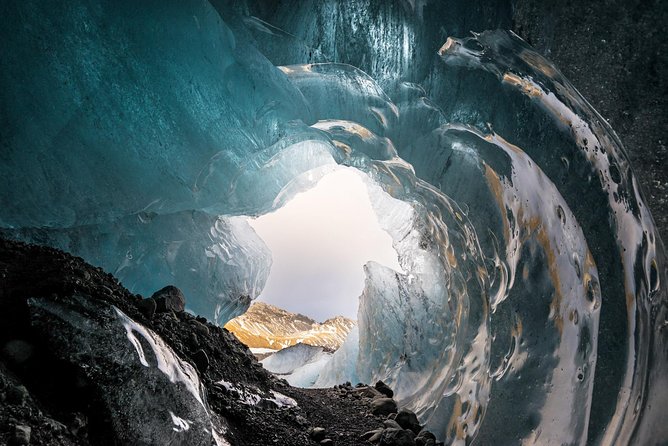
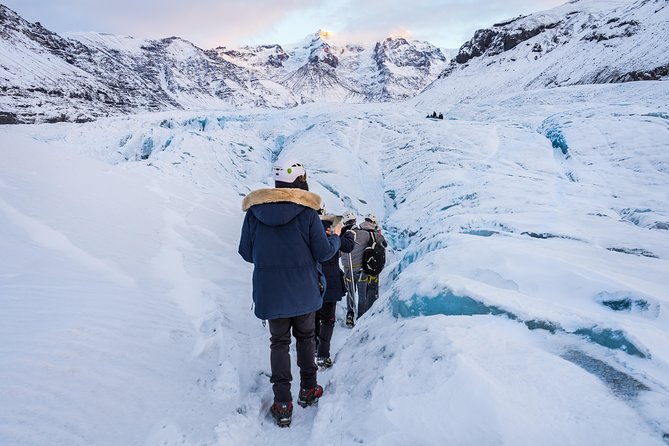
The hike is described as easy by several people who had little or no ice experience, but easy does not mean effortless. You walk over uneven frozen ground, climb gentle slopes, and move around ridges and cracks. A knee issue or poor fitness does not automatically rule you out, since one small group completed the route at a relaxed pace, but you should be honest about your condition.
Crampons make a major difference. Their spikes grip the ice, but you still need to lift your feet slightly and walk with a wider, deliberate step. Your guide will show you how. The ice axe is part safety tool and part walking aid, though you should follow the guide’s instructions rather than use it casually.
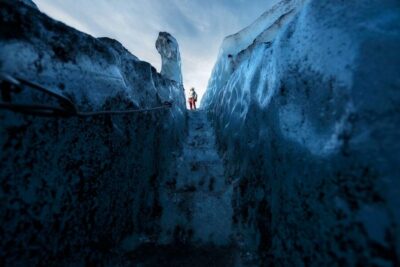
The scenery changes as you move. You might pass dark lines in the ice, narrow crevices, and tall ridges shaped by pressure and meltwater. Guides point out moulins, which are deep shafts where water travels into the glacier. These features make the glacier feel less like a static block of ice and more like a working natural system.
This is also where the tour earns much of its price. You are not simply paying for a photo stop. You get access to terrain that requires equipment, route knowledge, and an understanding of changing ice. The guide also explains how glaciers formed and how they are changing today, adding useful context to the views.
Bring water and eat before you arrive. One person became dizzy and shaky after skipping breakfast, though the guide handled the situation kindly. A proper meal, snacks, and a water bottle are sensible preparation for cold-weather exercise.
More Ice Cave Tours in Skaftafell
- Jökulsárlón: Vatnajökull Ice Cave Guided Tour
★ 4.2 · 2,046 reviews - Jökulsárlón: Crystal Ice Cave Super Jeep Tour
★ 4.1 · 1,681 reviews - From Jökulsárlón: Vatnajökull Glacier Blue Ice Cave Tour
★ 4.6 · 866 reviews - Jökulsárlón: The Original Ice Cave Tour on Vatnajökull
★ 4.6 · 846 reviews
Entering the blue ice cave
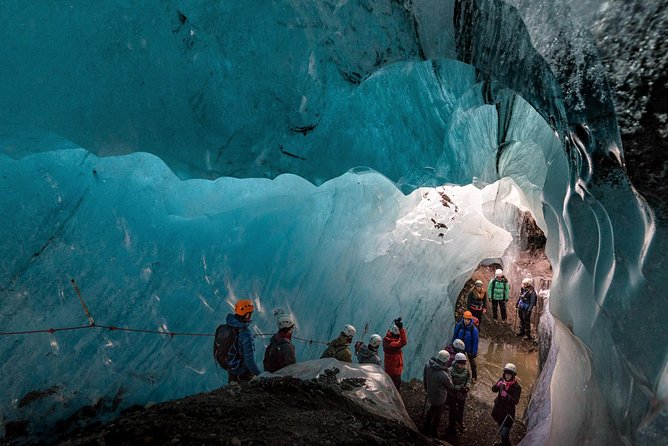
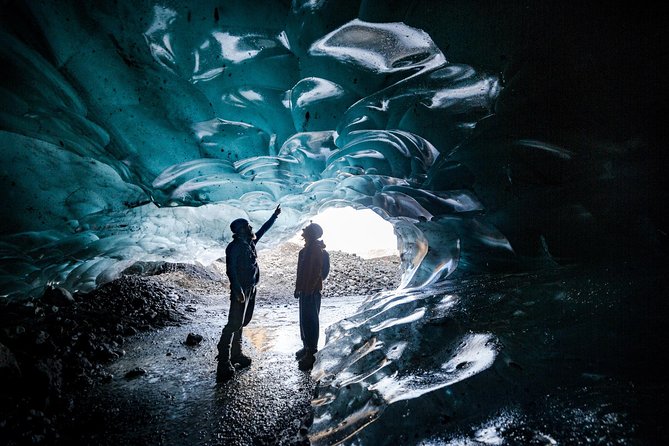
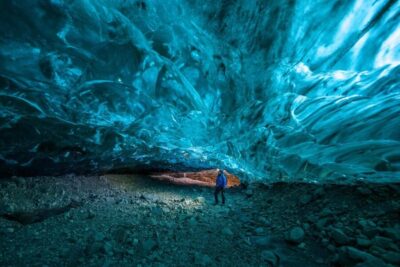
The cave is selected according to current conditions and safety. That point deserves attention. Ice caves are not permanent attractions with a fixed entrance, floor, and route. They melt, shift, collapse, and reform. The cave you visit may be different from the one photographed earlier in the season, and the guide may choose another opening if conditions change.
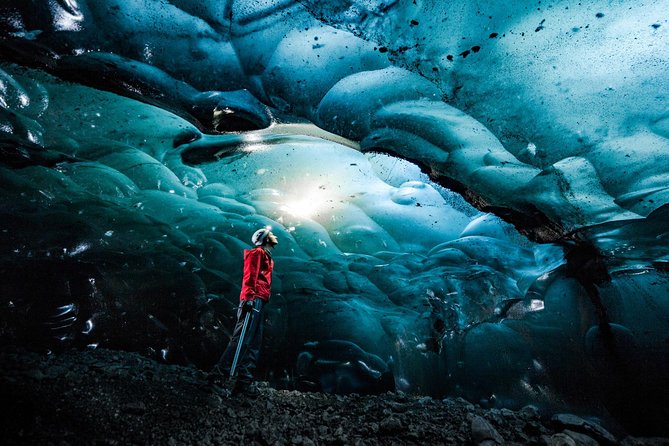
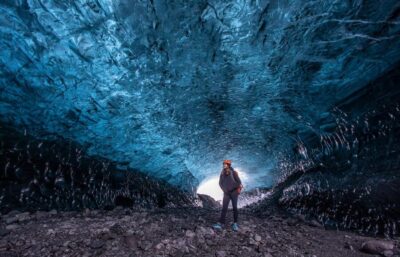
Inside, compressed glacier ice can show strong blue tones. The color comes from the way dense ice absorbs and scatters light, leaving blue light more visible. You do not need a science lecture to appreciate it, but the explanation makes the color feel less like a trick of photography.
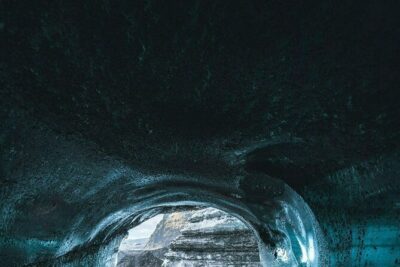
Expect a natural opening, tunnel, or short passage rather than a guaranteed giant chamber. Some outings have found a very small cave or ice tunnel. For some people, that part feels underwhelming. Others find that the blue walls and the chance to stand inside living glacier ice are enough.
The fair way to judge the cave is as one part of the outing, not the entire reason to book. If you need a huge, cathedral-like cavern for the trip to feel worthwhile, this tour carries some uncertainty. If you want a glacier walk with the chance to enter a changing ice formation, the cave adds a memorable extra layer.
You will have time for photographs, but listen closely to the guide about where to stand. The safest cave is the one selected for present conditions, not the one that looks most dramatic from an old photograph.
Crevasses, moulins, and photo stops
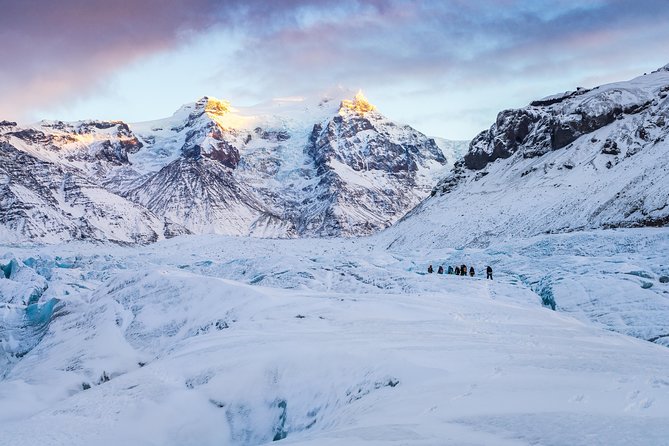
The most memorable features may be outside the cave. The guide can take you near crevasses and show you places where ice has split or melted into unusual forms. One outing featured a newly formed crevasse that proved more impressive than the small cave itself.
These stops also give the group a natural rhythm. You walk, pause for an explanation, take photographs, then continue. Guides such as Ola and Ivo have been praised for taking photos and finding good viewpoints without turning the hike into a rushed photo session.
The glacier offers strong contrasts. Smooth blue ice may sit beside dirty snow, gray rock, and sharp ridges. A fresh snowfall can cover some of the blue surface, so the glacier may look whiter on your day than it does in promotional images. That does not make the walk a failure, but it is another reason to treat the cave and the scenery as conditions-based.
Sun, cloud, snow, and wind all change the mood. In one winter outing, the combination of sun and moon in the sky became a highlight. On another, heavy snow reduced the visible blue ice but also meant fewer people around. You cannot order the weather, so go for the experience of being on the glacier rather than one exact photograph.
The guide makes the difference
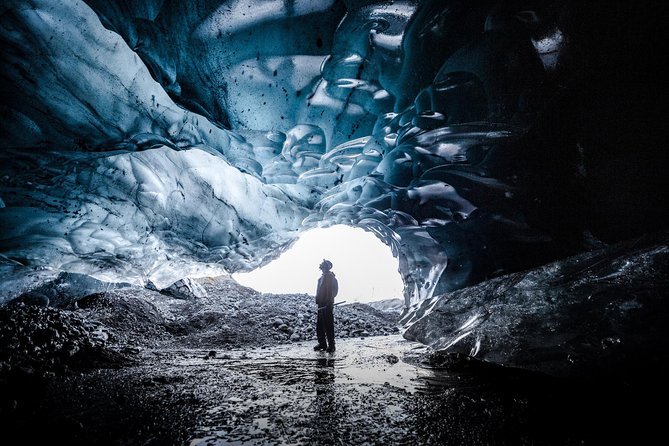
The guide is the heart of this outing. You need someone who can explain ice clearly, watch a mixed-ability group, and make sound decisions when conditions change. The praise for Ola, James, Albin, Jacek, Ivo, Marketa, Maya, and others points to the value of good leadership here.
Expect English instruction, safety checks, glacier facts, and help with the equipment. Some guides have also tried to explain points in other languages when able, but English is the official tour language.
A good guide does not make the glacier risk-free. Instead, the guide manages the route and helps you understand what you are seeing. That distinction matters. You still need warm clothing, sturdy boots, and enough energy to keep walking.
The maximum of 12 people per guide is a sensible limit. A larger group could mean more waiting and less personal help. With 12 or fewer, there is a better chance to ask questions, adjust your pace, and get a clear explanation when the group stops at a crevasse or cave.
Is $163 a fair price?
At $163 per person, this is not a cheap sightseeing stop. It is fair value if you want a guided glacier experience and do not already have crampons, an ice axe, a helmet, and the skill to use them.
The price includes the guide, safety equipment, a 4×4 transfer, and the natural ice cave visit. It does not include food, drinks, warm clothing, or hiking boots. Rental boots and outerwear are available for a fee, so add those costs if your Iceland packing list is light.
I see the value in the short transfer and the small group. You spend most of the four hours doing the activity rather than getting to it, and the group limit helps keep the outing personal. The main value is access and safety, not luxury. You are paying to walk in a place that requires specialist judgment.
Compared with a simple glacier viewpoint, the price is high. Compared with arranging technical gear and a qualified guide yourself, it is a practical way to experience the ice without taking on that responsibility.
Who should book this glacier walk?
I would recommend it to active visitors who want more than a scenic stop and who are happy to follow instructions. It suits first-time glacier walkers particularly well because the gear and basic training are provided.
It can also work for older participants or people with modest fitness if they can walk on uneven ground and keep moving for about 2.5 hours. The pace has been relaxed for some groups, but this is not a seated attraction. A knee problem, balance issue, or health concern deserves careful thought before booking.
Families can consider it for children aged eight and up, provided they meet the shoe-size rules and can manage the walk. Children under eight cannot join.
Pack ankle-support hiking boots, warm layers, waterproof trousers and jacket, a hat, gloves, water, and a snack. Eat beforehand. The glacier is cold even when the sky looks bright, and Icelandic weather can shift quickly.
Final verdict: book it for the glacier, not only the cave
I would book this tour if I wanted a manageable first glacier experience near Skaftafell. The strongest reasons are the small group, careful guides, supplied technical gear, and the chance to walk among crevasses and moulins on Falljökull.
I would not book it if my main goal were a guaranteed enormous blue cavern. The cave is natural and temporary, so it may be small, short, or replaced because of conditions. The glacier walk remains worthwhile, but your expectations should match the nature of the place.
At $163, this is a strong choice for an active half-day in Iceland. Come prepared, eat first, wear proper boots, and let the guide decide which ice is safe. If that sounds like the right kind of adventure, this is one of the more direct ways to meet Vatnajökull on its own ground.
FAQ
How long does the Skaftafell glacier tour last?
The activity lasts four hours. This includes a 20-minute 4×4 bus ride to the glacier, about 2.5 hours on Falljökull, and a 20-minute ride back to Skaftafell Base Camp.
Where does the tour start?
You meet at the Arctic Adventures hut in Vatnajökull National Park, near the Skaftafell visitor centre.
How large is the group?
The group is limited to a maximum of 12 participants per guide.
Is glacier equipment included?
Yes. The tour includes glacier crampons, a helmet, a walking ice axe, and a harness.
Do I need to bring hiking boots?
Yes. Sturdy hiking boots with ankle support are mandatory. Boots may be rented for a fee, and crampons are available for EU shoe sizes 35 through 50.
Is the ice cave always the same?
No. Ice caves are constantly changing. The guide selects the cave according to current conditions and safety, so its size and shape can vary.
What is the minimum age?
The minimum age is eight years old. Children under eight cannot participate.
Is food included?
No. Food and drinks are not included. Bring water and eat before the hike. A snack is also sensible for this active outing.
What happens if I need to cancel?
You can cancel up to 24 hours in advance for a full refund. A reserve-now, pay-later option is also available.
More walks and hikes around Skaftafell
- Jökulsárlón: Vatnajökull Glacier Guided Hiking Tour
★ 4.7 · 921 reviews - Skaftafell Glacier Hike 3-Hour Small Group Tour
★ 4.5 · 580 reviews - Blue Ice Discovery – Guided Glacier Hike from Skaftafell
★ 5.0 · 532 reviews - Skaftafell: Extra-Small Group Glacier Hike
★ 4.9 · 501 reviews
Just added in Skaftafell
- Natural Blue Ice Cave Tour of Vatnajökull Glacier from Jökulsárlón★ 4.5 · 294 reviews
- Glacier Adventure From Skaftafell – Small Group Tour★ 5.0 · 364 reviews
- Skaftafell: Extra-Small Group Glacier Hike★ 4.9 · 501 reviews
- Glacier Hike from Skaftafell – Extra Small Group★ 5.0 · 473 reviews
- Skaftafell Glacier Hike 3-Hour Small Group Tour★ 4.5 · 580 reviews
- Blue Ice Discovery – Guided Glacier Hike from Skaftafell★ 5.0 · 532 reviews
- From Jökulsárlón: Crystal Blue Ice Cave Super Jeep Tour★ 4.5 · 540 reviews
- Jökulsárlón: Vatnajökull Glacier Guided Hiking Tour★ 4.7 · 921 reviews
Ice Cave Tours, compared.
Katla Ice Cave & South Coast Waterfalls Tour
Read our review →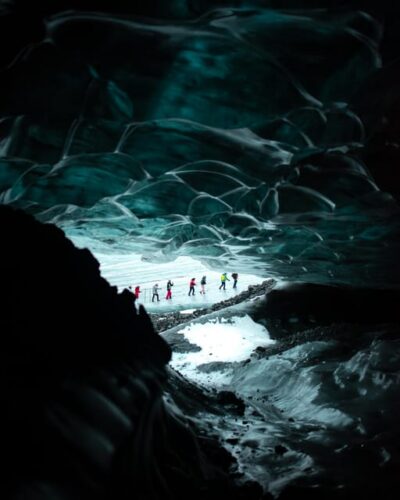
Browse the lists this tour appears in