
Reviewed · VOLCANO & LAVA TOURS
Volcano Movie – Experience the Latest Eruptions in Iceland
Iceland’s volcanic story comes alive on screen here, from the 1918 Katla eruption to the recent fires at Fagradalsfjall. The film uses 4K footage and natural sound, so you see lava, ash, ice, and steam without a presenter talking over the action.
I especially like the compact price of $16 and the clear historical sweep. You also get a useful look at eruptions that made headlines, such as Eyjafjallajökull in 2010, alongside Holuhraun, a huge event that received far less attention.
The main drawback is simple: this is a cinema experience, not a field trip to an active volcano. There is no vocal narrative, and the film’s current score is 3.6 from three ratings, so you should book it for strong visual storytelling rather than a guided lecture.
Key points to know before you go
- 4K footage covers more than a century of eruptions, beginning with Katla in 1918 and continuing through the latest Fagradalsfjall activity.
- Eyjafjallajökull gets its proper context, including the 2010 eruption that stopped air traffic across Europe for days.
- Holuhraun receives welcome attention, showing the scale of the 2014 to 2015 eruption that many people outside Iceland barely heard about.
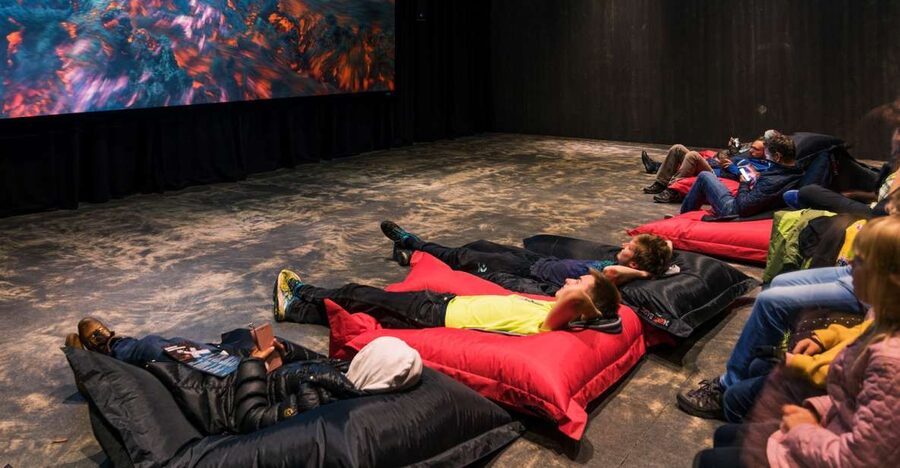
- There is no voice-over, only moving images and sound, so you should be comfortable taking in the story visually.
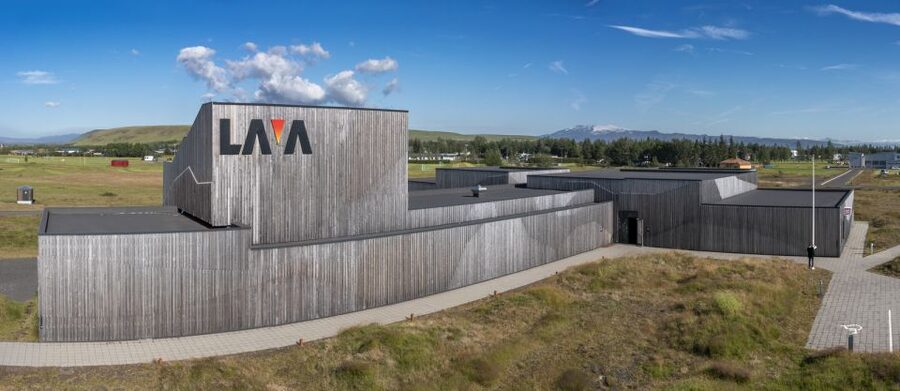
- The cinema is inside LAVA Centre in Hvolsvöllur, with free earthquake and volcano information at the entrance.
- The $16 ticket is for the cinema only, while food and drinks are available separately at the Katla restaurant and shop.
A volcanic century on one screen
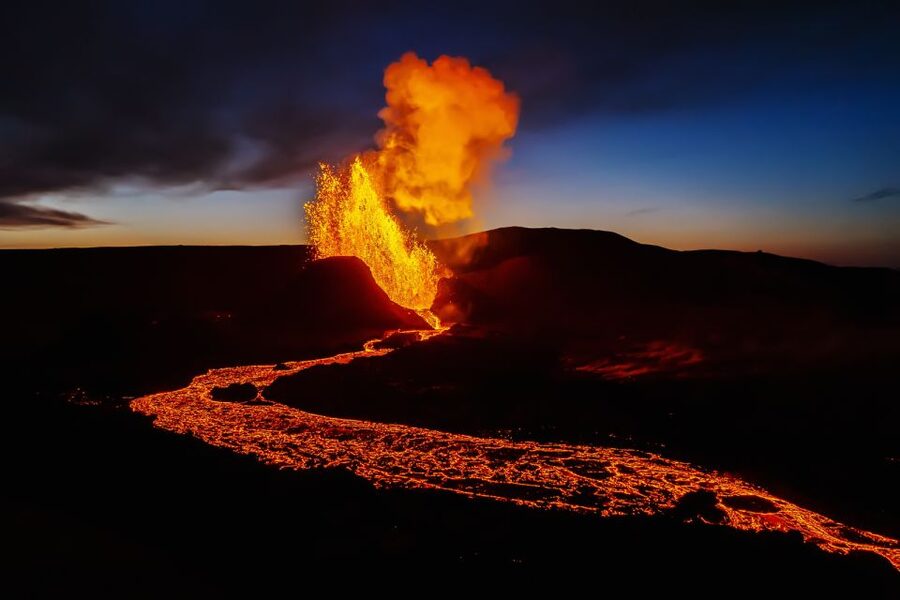
This film works best as a visual introduction to Iceland’s active geology. It begins with a short historical overview, then moves through a series of eruptions that shaped the country and affected people far beyond Iceland.
The timeline starts with Katla in 1918, followed by Hekla in 1947 and Askja in 1961. It then includes Surtsey in 1963, the Westman Islands eruption in 1973, and the Krafla fires that began in 1975.
That sequence matters because Iceland’s eruptions are not all alike. Some occur beneath ice caps. Some create new land. Others threaten towns, roads, farms, or air travel. By placing them together, the film helps you see that Icelandic volcanism is not one repeating event with different names. Each eruption has its own force and consequences.
You do not need a specialist background to follow the program. The story is carried by footage and sound rather than a spoken lesson. That makes the presentation easy to watch, but it also means you should not expect detailed explanations from a guide during the screening.
More craters and lava fields near Iceland:
- Reykjavik: Golden Circle Full-Day Tour with Kerid Crater
★ 4.8 · 24,485 reviews - From Reykjavik: Golden Circle, Kerid, & Secret Lagoon Tour
★ 4.8 · 6,009 reviews - Small-Group Golden Circle, Blue Lagoon with Ticket & Kerid Crater
★ 5.0 · 5,631 reviews
The 2010 eruption that changed air travel
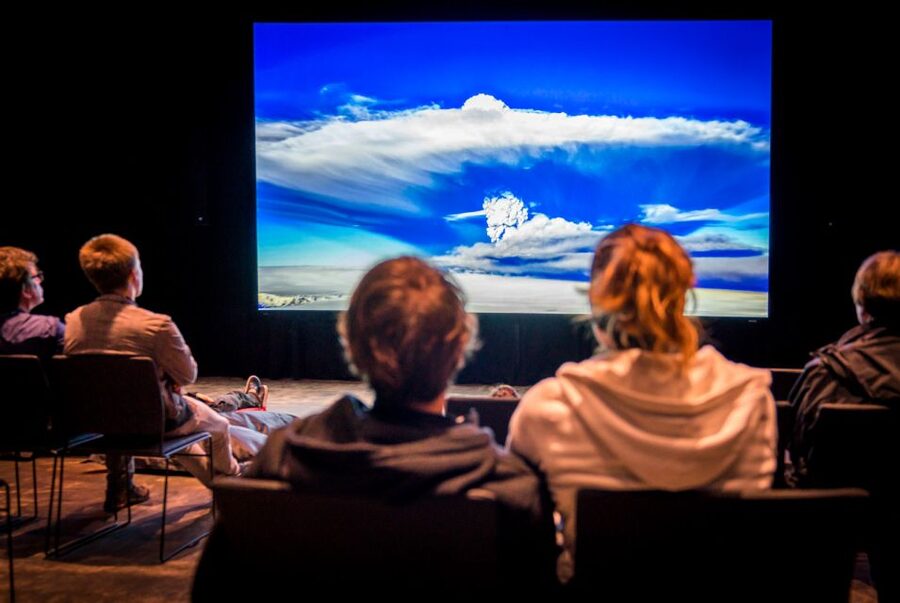
The section on Fimmvörðuháls and Eyjafjallajökull is likely to be the most familiar part for many people. In 2010, the Eyjafjallajökull eruption sent ash into the atmosphere and blocked air traffic across Europe for days.
The film first presents the Fimmvörðuháls eruption, then follows with Eyjafjallajökull. Seeing the two events together helps clarify that the 2010 volcanic episode was not just one dramatic burst. It developed through linked activity in an area where fire, ice, and nearby communities meet.
This is one of the strongest reasons to add the film to a South Iceland itinerary. You may already remember the airport disruption, but news reports often reduced the event to a difficult name and a cloud of ash. Here, the focus shifts back to the eruption itself and to the people living near it.
The film also gives you a better sense of scale. A volcanic event can look spectacular on camera, yet still bring serious disruption to residents, roads, farms, and aviation. That human effect is an important part of what the program aims to show.
Grímsvötn and the overlooked Holuhraun eruption
The presentation continues with Grímsvötn in 2011 and Holuhraun from 2014 to 2015. The Holuhraun eruption is especially useful because it was massive but did not receive the same worldwide attention as Eyjafjallajökull.
That contrast makes the film more valuable than a simple collection of famous eruption clips. You get a reminder that media attention and geological importance are not the same thing. An eruption can be enormous, remote, or difficult to reach, yet still have major effects on Iceland.
Holuhraun also broadens the story beyond the event most international visitors know. If your Iceland knowledge begins and ends with the 2010 ash cloud, this section fills a clear gap. It shows that Iceland’s recent volcanic history includes several large events, not just the one that disrupted European flights.
The film’s natural sound is important here. There is no voice-over explaining every image, so the rumble, cracking, and movement of the eruption carry much of the mood. I like that choice for a cinematic experience, though visitors who want a lesson packed with facts may prefer to pair the film with the other information at LAVA Centre.
Fagradalsfjall and the latest eruptions
The final part turns to the recent eruptions at Fagradalsfjall, also called Fagradalseldar for the series of eruptions. This brings the film’s timeline into the present and gives you a chance to see Iceland’s volcanic story continuing rather than ending with the famous events of the past.
That current focus is useful if you have followed recent news from the Reykjanes area. It also gives first-time visitors a better sense of why volcanoes remain part of everyday planning in Iceland. The country’s eruptions are not only historical subjects in museums. New activity can change roads, air travel, access, and local routines.
The available information does not give a precise running time, so you should not plan around an exact number of minutes. The activity is sold as a one-day cinema admission, with starting times based on availability. Check the time when you book, especially if you are fitting it between stops on a busy South Iceland route.
Same base, a different kind of day out:
- Reykjavik Food Walk – Local Foodie Adventure in Iceland
★ 5.0 · 18,952 reviews - Iceland: Northern Lights Bus Tour from Reykjavik
★ 4.1 · 11,161 reviews - Reykjavík: South Coast Waterfalls, Black Sand & Glacier Tour
★ 4.8 · 11,030 reviews - Reykjavík: Whale Watching and Marine Life Cruise
★ 4.6 · 9,838 reviews
What the no-narration format feels like
The film has no vocal narrator. It uses footage in 4K or better, along with sound, to tell its story.
For me, that is both its appeal and its limitation. The lack of commentary keeps the screen uncluttered. You can watch the eruption rather than listen to someone describe what you are already seeing. The high image quality should also help with details such as glowing lava, ash, steam, and the meeting of fire and ice.
At the same time, you will not hear a spoken explanation of every eruption as it appears. The historical sequence is given in the supplied description, but the film itself is built around visual presentation. If you want dates, scientific terms, and detailed background, allow time to read the free information at the entrance to LAVA Centre.
A short German booking comment described the experience as interesting, concise, and entertaining. That is a useful expectation to carry with you. This is not designed as a full-day museum course. It is a focused film that presents a large subject in a direct way.
Why the LAVA Centre location helps
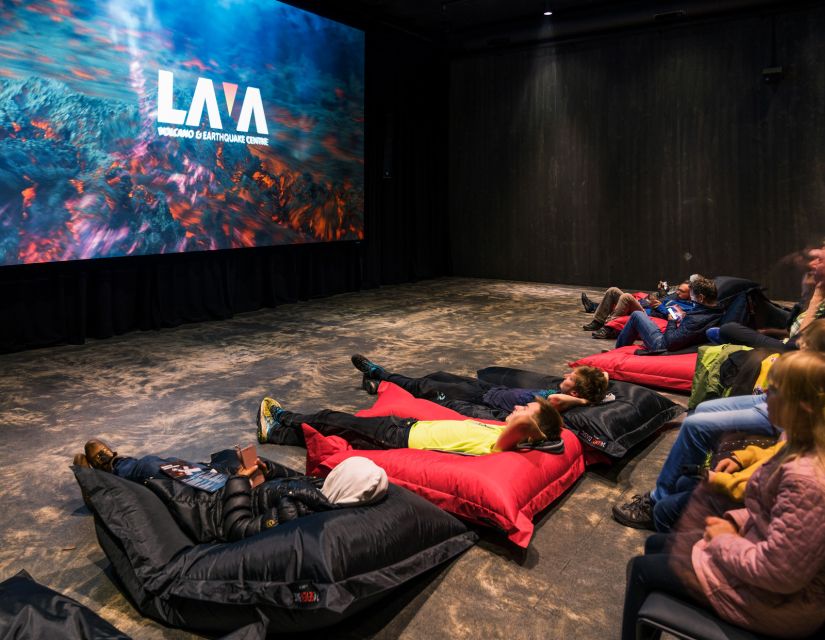
The meeting point is easy to identify: the first building on the left when you come from Reykjavík or the Golden Circle. It is at LAVA Centre, Austurvegur 14, in Hvolsvöllur.
You cannot count on this being a remote volcano outing. The appeal is convenience. You can combine the screening with other South Iceland stops without arranging special transport to a trailhead or eruption site.
The free information at the entrance adds useful context before or after the film. It covers earthquakes in Iceland and the major volcanoes around the LAVA Centre. That makes the location more than a place to sit in front of a screen, even though the $16 activity itself includes only the cinema entrance.
The site is wheelchair accessible. Hosts or greeters speak English and Icelandic, so you can ask practical questions in either language. No individual guide names are provided, and the film itself has no spoken guide.
Food, timing, and the practical details
Food and drinks are not allowed inside the cinema. That rule is worth noting if you are arriving after a long drive with snacks in the car.
You can buy food at the in-house Katla restaurant and shop. Since the cinema ticket does not include food, keep that purchase separate from the $16 admission. The restaurant gives you an easy option before or after the screening, but the supplied details do not specify a meal menu or opening hours, so check locally if your schedule is tight.
The activity is valid for one day, and you need to check availability for the starting times. You can reserve now and pay later, which is useful for an Iceland itinerary that may shift with road conditions or weather. Cancellation is free up to 24 hours in advance for a full refund.
There is no transportation listed as part of the admission. Plan to reach Hvolsvöllur on your own. The meeting point directions are straightforward if you are coming from Reykjavík or the Golden Circle.
Is $16 good value?
At $16 per person, the ticket is reasonably priced for a short, focused look at Icelandic eruptions in high-quality footage. The value is strongest if you are already passing through Hvolsvöllur and want a clear introduction without committing to a longer museum visit or a guided outdoor excursion.
You are paying for the film entrance only. That means the price does not cover food, transport, or a guided volcano walk. Still, the ticket gives you a curated historical sequence, rare eruption footage, and a convenient place to learn about events that are difficult or impossible to witness safely in person.
The best value comes from combining the film with the free earthquake and volcano information at the entrance. You can first watch the visual story, then use the displays to put the footage into a broader Icelandic setting.
I would not choose it solely because you want the cheapest possible indoor activity. Its value depends on your interest in volcanic forces and on your willingness to watch without narration. For someone fascinated by Iceland’s geology, $16 is a fair cost. For someone hoping to visit an active eruption site, it will feel like the wrong type of experience.
Who will enjoy this most?
I would recommend the film to you if you want to understand Iceland through its eruptions but do not have time for a full museum visit. It suits adults, families, and anyone who prefers strong images over a long spoken presentation.
It is also a good choice after visiting volcanic areas in South Iceland. Seeing footage of past activity can give more meaning to the black ground, glaciers, lava fields, and steaming areas you encounter elsewhere, without requiring you to approach an active site.
You should think twice if you need a detailed scientific lecture or a live guide explaining each scene. The absence of voice-over is central to the format, not a minor detail.
The film can also work well on a poor-weather day. The activity takes place indoors, and its subject remains dramatic even when rain or wind makes outdoor sightseeing less pleasant. The supplied information does not promise a particular runtime or special presentation beyond the 4K film, so keep your expectations focused.
Should you book the Volcano Movie?
Book it if you are driving through Hvolsvöllur, have a strong interest in Iceland’s volcanic past, and want to see eruptions from Katla, Hekla, Surtsey, Eyjafjallajökull, Grímsvötn, Holuhraun, and Fagradalsfjall in one sitting.
The strongest reasons are the 4K footage, the coverage of both famous and overlooked eruptions, and the useful location beside LAVA Centre’s free volcano information. The main caution is the no-narration format. You are choosing a visual film, not a lecture or an outdoor tour.
At $16, it is a sensible add-on for a South Iceland day, especially if you reserve with the flexible payment and cancellation terms. If you want a spoken scientific explanation or a close look at an active volcano in the open air, spend your time and money elsewhere.
FAQ
Where is the Volcano Movie shown?
It is shown at LAVA Centre, Austurvegur 14, 860 Hvolsvöllur, Iceland. The building is the first one on the left when coming from Reykjavík or the Golden Circle.
How much does the experience cost?
The cinema entrance costs $16 per person. Food, drinks, and transportation are not included.
What eruptions are covered?
The film begins with eruptions including Katla in 1918, Hekla in 1947, Askja in 1961, Surtsey in 1963, the Westman Islands in 1973, and Krafla from 1975. It also covers Fimmvörðuháls, Eyjafjallajökull, Grímsvötn, Holuhraun, and the recent Fagradalsfjall series.
Is there a voice-over?
No. The film uses 4K or better footage and sound, without a vocal narrative.
Can I buy food at the venue?
Yes. Food is available at the Katla in-house restaurant and shop. Food and drinks are not allowed inside the cinema.
Is the cinema wheelchair accessible?
Yes, the activity is wheelchair accessible. Hosts or greeters speak English and Icelandic.
Just added in Iceland
- Akureyri: Whale Watching Shore Excursions★ 4.6 · 250 reviews
- Reykjavik: Whale and Puffin Watching RIB Boat Tour★ 4.6 · 179 reviews
- Reykjavik: Whale Watching Express★ 4.3 · 227 reviews
- Reykjavik: Whale Watching & Lava Show★ 5.0 · 4 reviews
- Akureyri: Whale Watching Tour & Forest Lagoon Entrance★ 3.8 · 4 reviews
- West Glacial River Family Rafting★ 5.0 · 9 reviews
- Reykjavik: Whale & Marine Adventure Tour★ 4.3 · 71 reviews
- From Reykjavík: Viking Horseback Tour in Hafnarfjörður★ 4.9 · 112 reviews
Volcano & Lava Tours, compared.
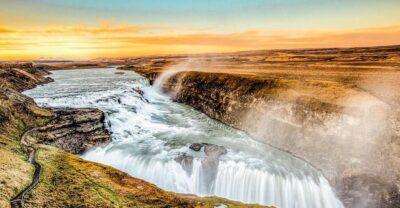
Golden Circle Full-Day Tour with Kerid Crater
Read our review →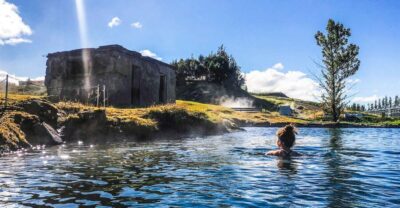
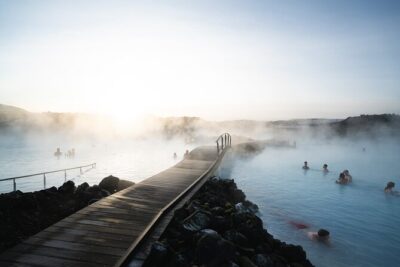
Small-Group Golden Circle, Blue Lagoon with Ticket & Kerid Crater
Read our review →
Golden Circle, Kerid Crater, & Blue Lagoon Tour
Read our review →
LAVA SHOW – Immersive Experience Entry Ticket
Read our review →
Lava Show Reykjavik Admission Ticket – Optional Premium Upgrade
Read our review →
Golden Circle with Kerid Volcanic Crater Day Tour from Reykjavik
Read our review →
Browse the lists this tour appears in