
Reviewed · SILFRA SNORKELING & DIVING
Dive the Divide: Silfra Fissure Scuba Tour | Meet at Thingvellir
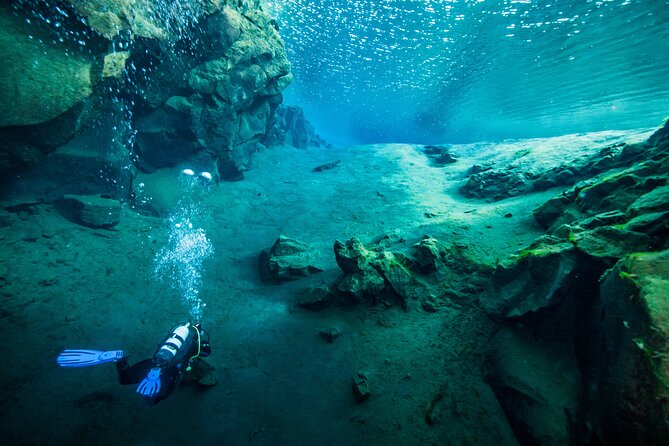
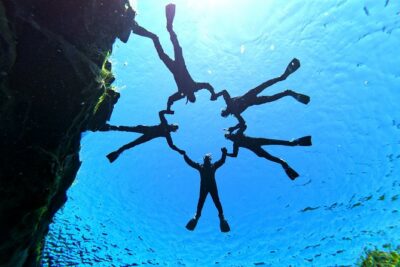
Silfra is one of those rare places where the scenery continues below the waterline. You move through an electric-blue crack between two continental plates, then into the Hall, Cathedral, and Lagoon, with visibility that can reach more than 100 meters. It is a remarkable setting, but this is not a gentle sightseeing swim.
I like the three-person maximum, which keeps the guide close and makes the route feel personal. I also like the practical finish: hot chocolate, cookies, and a chance to get warm after the equipment walk back to the parking area. The main drawback is the physical demand. You must carry heavy tanks and gear about 400 meters, and cold water, a drysuit, and limited depth make this a serious cold-water activity.
Key points to know before booking
- You need recent drysuit experience: Bring a drysuit certificate or a logbook showing at least 10 previous drysuit sessions, with a professional’s signature. You must have used a drysuit within the last two years.
- The group is capped at three people: A PADI-certified divemaster leads the tour, with plenty of attention for safety checks and equipment fitting.
- Summer and winter schedules differ: In summer, you may make two 30-minute sessions. In winter, temperatures below freezing can reduce the outing to one dive of about 45 minutes.
- The walk matters: You carry heavy equipment roughly 400 meters before entering the water and remove much of it before walking back.
- Thingvellir parking costs extra: The national park charges 500 ISK for a private car, and no pickup from Reykjavik is included.
- Warm clothing is essential: Bring fleece or wool layers, warm socks, and a full change of clothes in case your drysuit lets in water.
Why Silfra is more than a cold-water stunt
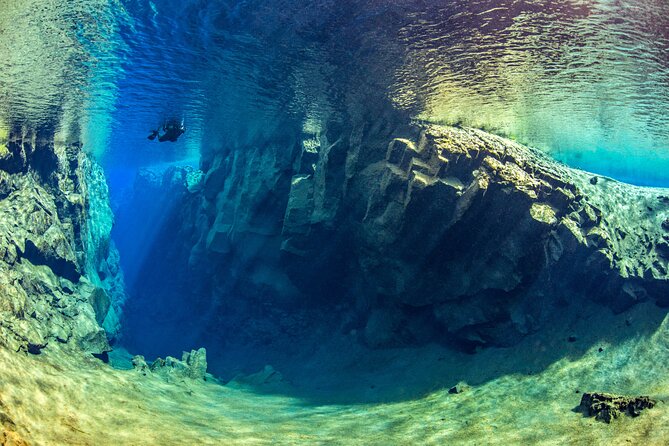
Silfra sits in Thingvellir National Park, a place already known for its dramatic geology. Here, the underwater route takes you through a narrow space between continental plates. The appeal is not coral, fish, or colorful marine life. It is the rock, the water, and the strange feeling of moving through a crack in the Earth.
The water is famous for its clarity. Visibility can extend beyond 328 feet, or 100 meters, so even a short swim can open into a long blue view. You may also taste the water. It is clean and safe to drink, though the chance is more of a fun detail than a reason to book the tour.
The route passes through four named sections. You begin in the Silfra Deep Crack, where the gap is narrow. It then widens into Silfra Hall, continues toward Silfra Cathedral, and finishes at Silfra Lagoon. Each section gives you a different view of the rock walls and water color.
This is a geological experience first and a recreational scuba outing second. If you want abundant wildlife or a relaxed warm-water session, this is the wrong choice. If you like unusual natural settings and have the required cold-water skills, it offers something few other tours can match.
More cold-water snorkelling and diving from Reykjavik:
- Silfra: Snorkeling Between Tectonic Plates – Meet on Location
★ 5.0 · 5,001 reviews - Reykjavík: Silfra Fissure Snorkeling between Two Continents
★ 4.7 · 1,712 reviews - Silfra Drysuit Snorkeling with Free Photos – Meet on Location
★ 5.0 · 1,299 reviews
Meeting at Thingvellir, not Reykjavik
You meet at the Silfra meeting point on Vallarvegur in Thingvellir National Park. The activity begins and ends there, so you need to arrange your own transportation from Reykjavik. The tour does not include hotel pickup, and parking is your responsibility.
The park charges a small fee for a private car, listed as 500 ISK. Build that into your budget and allow enough time to reach the meeting point for your booked start time. The tour itself lasts about four hours, but that includes preparation, gear handling, the walk to the water, the underwater route, changing clothes, and the warm drink afterward.
Once you meet the guide, expect a full briefing. You will hear about park rules, hand signals, the route, and the basic procedures for the outing. You will also get familiar with the drysuit and the rest of the equipment before heading toward the entrance.
The small group is important here. With no more than three people, the guide can watch equipment, buoyancy, comfort, and communication closely. That matters in cold water, where a minor problem can feel much larger than it would in a warm pool.
The equipment walk is part of the challenge
Before you reach the water, you must carry the equipment about 1,312 feet, or 400 meters. That is not a casual stroll in a swimsuit. Tanks, weights, regulator, fins, mask, thermal undersuit, and drysuit add weight and bulk.
You need strong physical fitness and must be comfortable handling gear on land. The route is limited to a maximum depth listed as 59 feet, or 18 meters, but the depth does not make the outing easy. Cold, restricted movement, and the weight of the equipment create the real challenge.
The operator supplies the specialized gear, including:
- Drysuit
- Thermal undersuit
- Mask and fins
- Tanks and weights
- Regulator
- Other required scuba equipment
You must supply the right personal layers. Wear warm fleece or wool undergarments and warm socks. Bring a complete change of clothes, too. No drysuit can be guaranteed to stay perfectly dry unless it was made specifically for you, so a spare outfit is sensible rather than excessive.
If you wear glasses, plan carefully. You cannot use ordinary glasses beneath the mask because the seal must remain clear. You need to go without them, wear contact lenses, or bring prescription goggles that work with the mask.
Getting into Silfra’s clear water
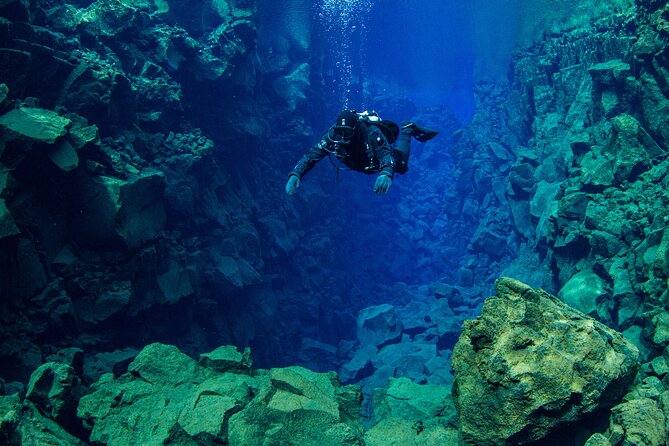
At the entrance, you descend a ladder to a submerged metal platform. You stand in waist-deep water while the guide helps you acclimatize and complete weight and safety checks.
This slow start is useful. The equipment feels different in the water, and the drysuit changes how you move and float. You have a chance to settle your breathing and confirm that the mask, regulator, weights, and suit are working before heading farther in.
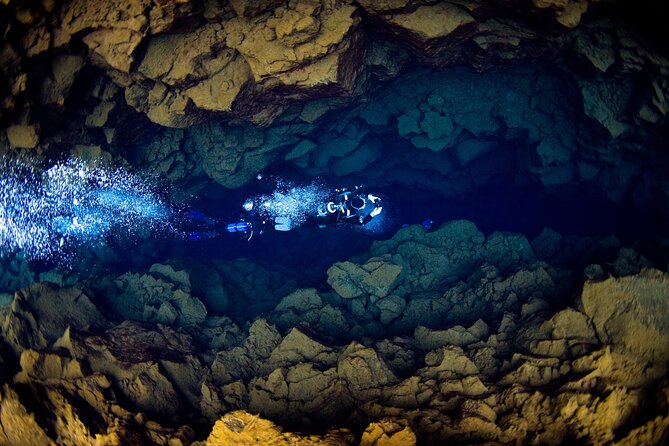
From there, you follow the guide underwater. The Deep Crack is the first major section, with the two continental plates close together. The narrow gap gives the route its most unusual feeling. You are not simply swimming beside a rock wall. You are moving through a geological split.
The water color can look intensely blue, especially against the dark lava walls. With visibility reaching beyond 100 meters, you may see a long way ahead even when the passage changes shape. Clear water does not mean warm water, though. You should expect the cold to be a constant part of the outing.
A few more things to do in Reykjavik worth a look
- Silfra: Diving Between Tectonic Plates and Pick Up from Reykjavik
★ 5.0 · 590 reviews - Dive the Divide: Silfra Fissure Scuba Tour | Reykjavik Pickup
★ 4.5 · 94 reviews - Thingvellir: Silfra Fissure Diving with Optional Pickup
★ 4.6 · 73 reviews - Silfra: Diving Between Tectonic Plates
★ 4.8 · 64 reviews
From Silfra Hall to the Cathedral
As the passage widens, you enter Silfra Hall. The space gives you more room to look around, and the rock formations become the main attraction. The guide leads the route, so your attention can stay on the walls, the changing width of the fissure, and your own comfort.
Silfra Cathedral is the most cavernous section. The tour information lists it as the deepest point at 72 feet, or 22 meters, while the stated tour limit is 59 feet, or 18 meters. Since those figures do not match perfectly, follow the guide’s route and the actual safety limits given during your briefing rather than treating the named section as a target depth.
The Cathedral is not a grand chamber in the usual tourist sense. Its appeal comes from plunging lava walls and the clean blue space between them. You get a strong sense of scale without the clutter of a busy underwater site.
A careful pace is part of the value. You are not racing through the fissure. The guide controls the route and signals, while you manage breathing, buoyancy, and the cold. That makes previous drysuit training especially important. This is not the place to learn how a drysuit behaves for the first time.
Finishing in the Silfra Lagoon
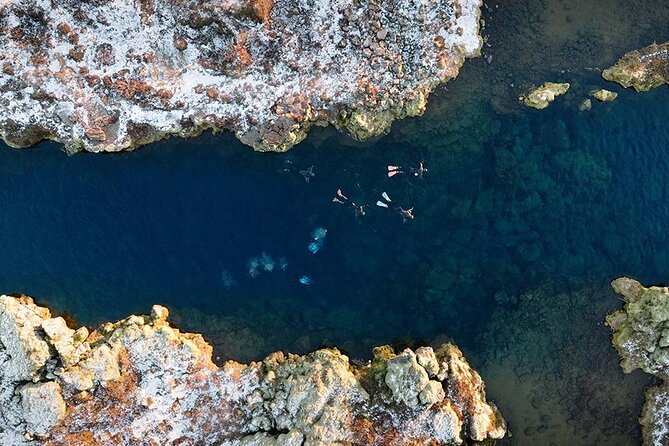
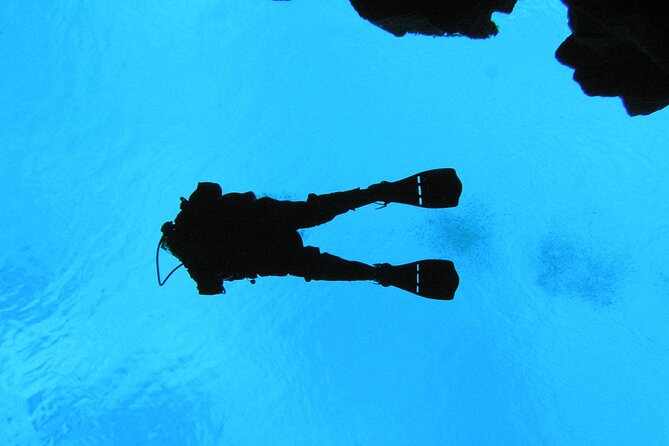
The final section is Silfra Lagoon, where the water opens into a bright-blue pool with remarkable visibility. It is a fitting end to the underwater route because the space feels wider after the narrow Deep Crack and the rock walls of the Hall and Cathedral.
You surface at the Lagoon, then remove your fins and other heavy equipment. The return to the parking area is on foot, so you are not carrying the full underwater setup. Even so, you will be ready for the changing area after the cold water and outdoor walk.
Back at the meeting point, you change into dry clothes and get hot chocolate and cookies. It is a simple included extra, but it matters. Warm food and drink help turn the end of the outing from a cold logistical chore into a comfortable finish.
Guide Franceska has been singled out for practical care during the preparation, including warming gloves and helping with drysuits. Her calm support is exactly what you want in this setting. The gear fitting and first moments in cold water can feel awkward, so a guide who pays attention to comfort makes a real difference.
Summer gives you more time in the water
The schedule changes with the season. During summer, the plan may include two 30-minute sessions. That gives you more underwater time, though the full four-hour duration still includes the briefing, equipment preparation, walks, and changing.
In winter, water temperatures can fall below freezing. If conditions are too cold, the guide may change the plan to one session of about 45 minutes for safety. This is worth understanding before you pay the price. You are buying access to the setting and professional guidance, not a guaranteed number of separate sessions.
The cold also affects what you wear and how you prepare. Warm layers are required, not optional. You should arrive ready for an outdoor activity, even though the main attraction is underwater.
The tour also requires good weather. If poor weather causes cancellation, you are offered another date or a full refund. For a weather-sensitive activity in a national park, that policy gives you useful protection.
Is the $296.41 price good value?
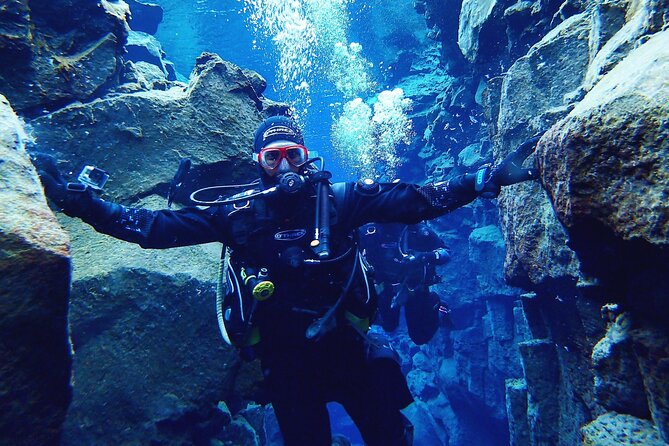
At $296.41 per person, this is an expensive half-day outing. The price makes more sense when you look at what is included: a certified PADI divemaster, a private-feeling group capped at three people, drysuit and scuba equipment, tanks, weights, thermal layers, and the guided route through the fissure.
You are also paying for a specialized location that requires trained staff and equipment suited to cold water. This is not comparable to a basic snorkeling trip where you arrive, borrow a mask, and follow a large group for a short swim.
The value is strongest if you already have the required skills and want a rare geological setting. You do not have to buy or transport your own drysuit gear, and you receive close supervision in a demanding environment.
The value is weaker if you are new to drysuit use, dislike cold water, or mainly want a relaxed activity. You still pay the full price even if winter conditions reduce the plan to one 45-minute session. Add your own transport from Reykjavik and the 500 ISK parking fee.
The booking pattern also matters. This outing averages booking 41 days ahead, so you should not assume you can decide at the last minute during a busy Iceland trip. Free cancellation is available up to 24 hours before the start time. Changes or cancellations inside that window are not accepted for a refund.
Who should book this Silfra experience?
This outing suits an experienced scuba diver who already knows how to use a drysuit. You need a PADI qualification, a drysuit certificate or a signed logbook showing at least 10 previous drysuit sessions, and a drysuit session within the last two years.
You also need the strength to carry equipment about 400 meters. That requirement is easy to underestimate when looking at photographs of the clear blue water. The best pictures come after a demanding setup, not instead of one.
I would choose this tour if you value geology, unusual natural settings, and a small group more than comfort. I would skip it if you want warm water, a low-effort afternoon, or a flexible activity with no certification requirements.
The guide’s role is central. A calm professional such as Franceska can help with gloves, suit fitting, signals, and confidence during the cold start. Still, good guidance cannot replace your own preparation. Arrive with current drysuit skills and the right clothing.
Should you book it?
Book this Silfra tour if you are a certified scuba diver with recent drysuit experience and you want to swim through one of Iceland’s most unusual natural sites. The tiny group, full equipment package, clear route, and warm drink afterward make the high price easier to justify.
Do not book it simply because the photographs look beautiful. The cold, gear weight, 400-meter walk, and strict certification rules are central parts of the outing. For the right diver, they are the price of entry to a remarkable underwater world. For everyone else, Thingvellir is better enjoyed from above the water.
FAQ
Where does the Silfra scuba tour meet?
You meet at the Silfra meeting point on Vallarvegur in Thingvellir National Park, Iceland. The activity also ends at this meeting point.
Is transportation from Reykjavik included?
No. Pickup service from Reykjavik is not included. You must arrange your own transportation to Thingvellir National Park.
What certification and experience do I need?
You need to be PADI certified and have previous drysuit experience. The guide must see a drysuit certification card or a logbook showing at least 10 previous drysuit sessions signed by a dive professional. You must also have used a drysuit within the last two years.
How old must I be to join?
The minimum age is 18.
How many people are in the group?
The tour has a maximum of three participants and is led by a certified PADI divemaster.
What happens if winter temperatures fall below freezing?
The guide may change the plan to one session of about 45 minutes for safety. During summer, the outing may include two sessions of about 30 minutes each.
Just added in Reykjavik
- Reykjavik: Whale and Puffin Watching RIB Boat Tour★ 4.6 · 179 reviews
- Reykjavik: Whale Watching Express★ 4.3 · 227 reviews
- Reykjavik: Whale Watching & Lava Show★ 5.0 · 4 reviews
- Reykjavik: Whale & Marine Adventure Tour★ 4.3 · 71 reviews
- From Reykjavík: Viking Horseback Tour in Hafnarfjörður★ 4.9 · 112 reviews
- Reykjavík: Horse Riding Tours★ 4.9 · 127 reviews
- Luxury Private Transfer from Reykjavik to Keflavik Airport★ 5.0 · 9 reviews
- Whales Of Iceland Admission Ticket★ 4.0 · 239 reviews
Silfra Snorkeling & Diving, compared.
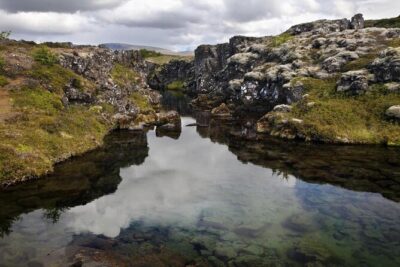
Snorkeling Between Tectonic Plates – Meet on Location
Read our review →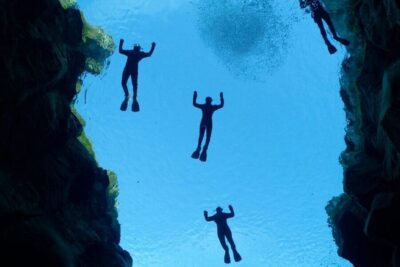
Silfra Fissure Snorkeling between Two Continents
Read our review →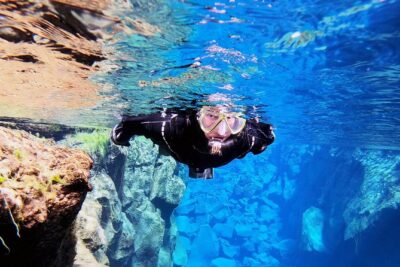
Silfra Drysuit Snorkeling with Free Photos – Meet on Location
Read our review →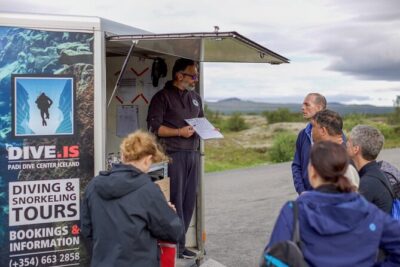
Snorkeling Between Tectonic Plates Pick Up from Reykjavik
Read our review →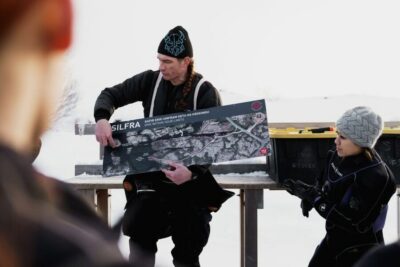
Half-Day Snorkeling Day Trip with Underwater Photos
Read our review →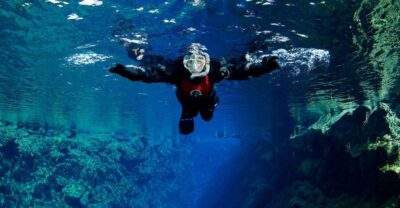
Silfra Drysuit Snorkeling Tour with Free Photos – From Reykjavik
Read our review →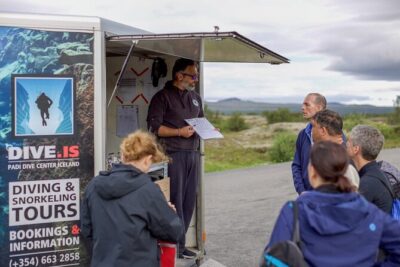
Diving Between Tectonic Plates and Pick Up from Reykjavik
Read our review →Browse the lists this tour appears in