
Reviewed · ICELAND
From Reykjavik: Snaefellsness Peninsula small group day tour
Snæfellsnes packs an astonishing amount of Iceland into one long day: seal beaches, black volcanic coast, mossy lava fields, basalt pinnacles, and Kirkjufell, the mountain made famous by Game of Thrones. The route gives you a broad look at western Iceland without asking you to rent a car or plan every turn.
I especially like the small maximum group of 18 and the mix of famous stops with quieter corners such as Búðakirkja and Lóndrangar. The guides, including Hilde, Thora, Max, and Siggy on different departures, have been praised for Icelandic stories and friendly care. The tradeoff is clear: this is a 12-hour day, with many hours in a minibus and rough paths at some stops.
Key points to know before booking
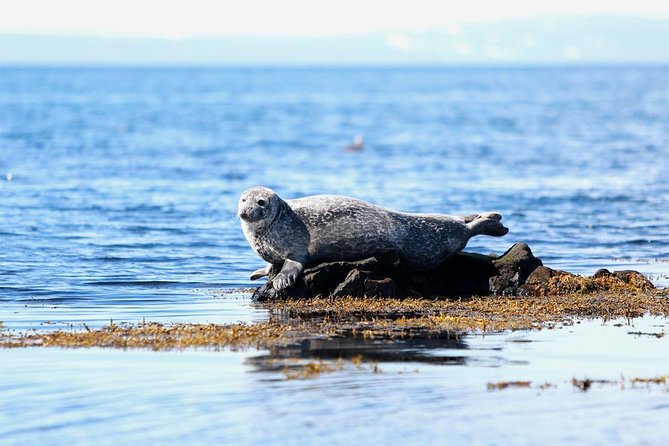
- Ytri Tunga gives you a chance to see wild seals, but sightings are never guaranteed, so bring binoculars or a long camera lens.
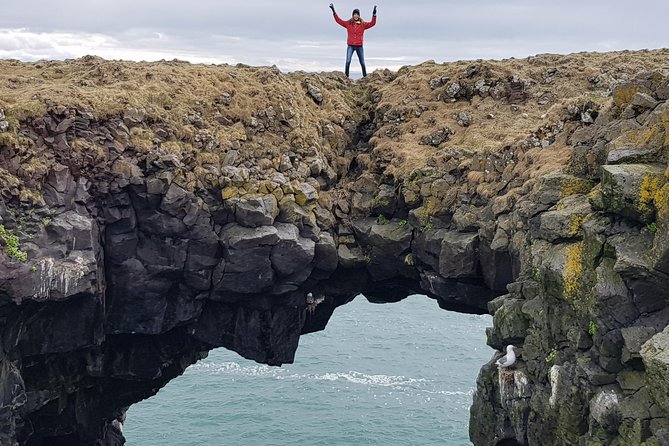
- Arnarstapi is one of the best walking stops, with an easier coastal path and dramatic arches shaped by Atlantic waves.
- Djupalonssandur requires care, since the path to the black beach can be rocky, steep, icy, or wet.
- Kirkjufell is a photo stop, not a mountain climb, and poor weather can hide the peak completely.
- The minibus holds no more than 18 people, a more personal setup than a large coach, though it can feel tight on a full departure.
- Food is not included, so pack light snacks and expect to buy or carry your own drinks.
Why Snæfellsnes makes such a good day trip
The Snæfellsnes Peninsula is often called Iceland in miniature, and this route shows why. In a single day, you move from a sandy beach to lava fields, from a tiny church to a fishing village, and from black volcanic stones to a sharply shaped mountain.
The scenery changes often enough to keep the long drive interesting. You pass through Borgarnes and travel beside fjord and mountain views before reaching the peninsula. From there, the route follows the coast and its scattered settlements rather than staying in one busy attraction area.
At $163.26 per person, the tour is not cheap, but Iceland day trips rarely are. The price covers a full day of transport from Reykjavík, an English-speaking driver-guide, live commentary, and WiFi on board. For you, the main value is time and planning: someone else handles the roads, weather concerns, parking, and route decisions.
You do give up independence. You cannot stay longer at a favorite beach or skip a stop that does not interest you. A few minutes can feel short at a spectacular viewpoint, while the return ride can feel long after a full day outside. Still, for a short Iceland visit, this tour covers ground that would take careful planning and a confident driver.
Other trips people book in Iceland:
- Reykjavik: Golden Circle Full-Day Tour with Kerid Crater
★ 4.8 · 24,485 reviews - Reykjavik Food Walk – Local Foodie Adventure in Iceland
★ 5.0 · 18,952 reviews - Iceland: Northern Lights Bus Tour from Reykjavik
★ 4.1 · 11,161 reviews
Starting in Reykjavík and crossing to Borgarnes
Pickup begins around 8 a.m. and can take up to 30 minutes. You may be collected at your accommodation or at a nearby designated bus stop. Downtown Reykjavík has traffic restrictions, so a minibus may not be allowed to stop directly outside your hotel.
Check the pickup point carefully before the morning of the tour. Bus-stop information is available through busstop.is, and your hotel desk can also help you find the correct location. A missed pickup can spoil an otherwise excellent day, so I would be ready early and keep the phone used for the booking available.
The first major town on the route is Borgarnes. You stop for about 20 minutes, mainly as a scenic and historical introduction to western Iceland. The drive there passes through a fjord and mountain country, and the town is connected with some of the earliest Norwegian settlement in Iceland.
This is not a long sightseeing visit, but it breaks up the opening drive and gives you a first look at the scale of the countryside. The guide may also use this stretch to explain Icelandic settlement, geography, and saga stories.
Ytri Tunga and the uncertain seal sighting
Ytri Tunga is a sandy beach with a seal colony on the rocks offshore. The seals are usually viewed from a distance, where they may lie on the rocks or lift their heads to watch the people on shore.
This stop lasts about 40 minutes. That gives you time to scan the water, walk along the beach, and take photographs without rushing. Bring binoculars if you have them. A zoom lens is even more useful, since the animals may be farther away than you expect.
You should keep expectations sensible. Some departures see several seals, even more than seven, while other visits see none. The beach remains worthwhile because of its open shore and the way the mountains sit behind it, but the seals are a bonus rather than a promise.
Weather matters here. Wind and cold can make a short beach stop feel severe, especially if the day is snowy or wet. Waterproof outerwear, gloves, and shoes with a firm grip will make a real difference.
The solitary Búðakirkja church
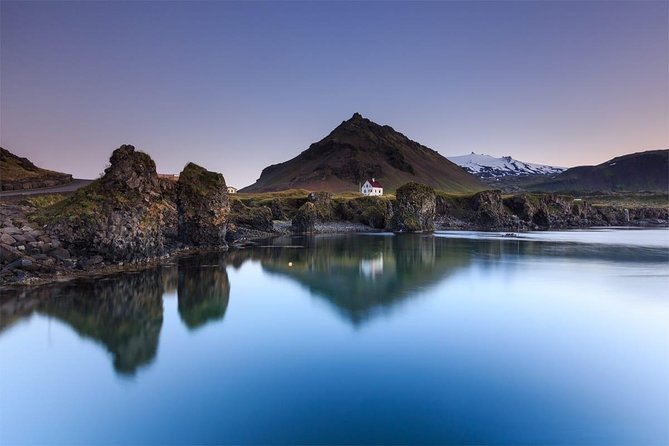
Búðakirkja is one of the peninsula’s most recognizable small buildings. The black church sits alone among lava rocks, with very little around it except open ground, a historic graveyard, and the wide Icelandic sky.
The church was first built at this site in 1703 and reconstructed in 1987 after one local person campaigned to bring it back. It is now a listed building owned by the National Museum of Iceland and cared for by the Búðir parish.
You usually have about 40 minutes here. The stop is less about entering a grand interior and more about seeing how a tiny human structure relates to the rough volcanic ground around it. The bell and chalice date from the church’s earlier period, adding a small but memorable link to Iceland’s past.
Búðakirkja is also an excellent photo stop because of its simple shape and dark color. If the weather is harsh, the open site offers little shelter, so have your coat ready before stepping off the bus.
Same base, a different kind of day out:
- Reykjavík: South Coast Waterfalls, Black Sand & Glacier Tour
★ 4.8 · 11,030 reviews - Reykjavík: Whale Watching and Marine Life Cruise
★ 4.6 · 9,838 reviews - Reykjavik: Sky Lagoon Entrance Pass With 7-Step Spa Ritual
★ 4.8 · 6,166 reviews - From Reykjavik: Golden Circle, Kerid, & Secret Lagoon Tour
★ 4.8 · 6,009 reviews
Arnarstapi, sea cliffs, and Gatklettur
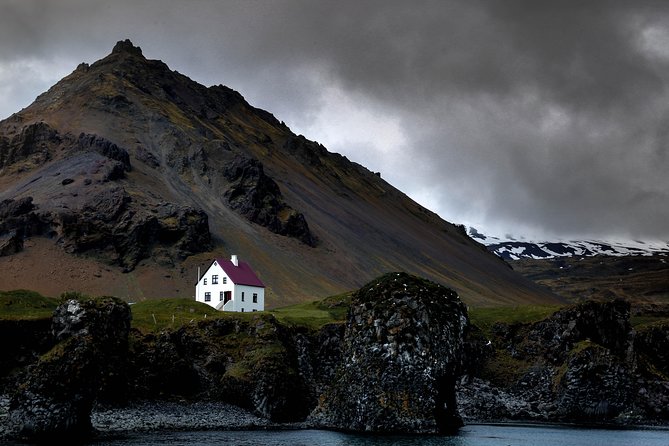
Arnarstapi is one of the strongest stops on the route. Once a fishing village, it sits below the mountains beside a coast shaped by old lava flows and Atlantic erosion.
The shoreline is full of forms that reward a slow walk. Waves have cut arches and cavities into the volcanic rock, and a marine geyser is found along the coast. The most famous formation is Gatklettur, also called Hellnar Arch, a natural stone arch that makes an excellent photograph when the sea is active below it.
You get about 40 minutes here, enough for a look around and a walk along part of the coast. The path at Arnarstapi is easier than the rough descent at Djúpalonssandur, making this one of the more comfortable walking stops for many people.
The guide may also tell stories about Bárður, the half-man, half-troll figure tied to the peninsula. These tales add character to the rocks without taking away from the geology. You are looking at lava shaped over long periods by water, ice, and waves, but Icelandic folklore gives the coast an extra layer of meaning.
If you have limited mobility or troubled knees, pay attention to the walking conditions at every stop. Arnarstapi is relatively manageable, but this tour as a whole is not designed around smooth, flat paths.
Djúpalónssandur and the lifting stones
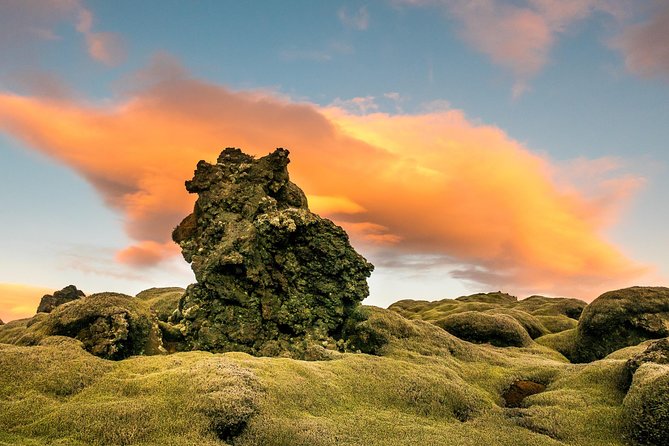
Djúpalónssandur is a black volcanic beach scattered with smooth stones. It has a strong, exposed feel, with the Atlantic pressing against the shore and dark rock underfoot.
For centuries, Icelandic fishermen used the beach and nearby waters. Four lifting stones remain as a reminder of that hard life. They were once used to test a person’s strength before taking on the demanding work of rowing into the Atlantic fishing grounds.
You can try lifting them, but do not treat this as a contest. The beach itself is the main attraction. The path down may be rocky and steep, and snow or ice can make it more difficult. One older visitor found this descent especially challenging, while other people found the walk manageable. Good footwear and a steady pace matter here.
The remains of a British fishing trawler are scattered across the beach. The ship ran aground in 1948, killing five people while local rescue teams saved 14 others. The wreckage gives the shore a sobering human story and shows why the Atlantic coast deserves respect.
This is also the stop where your shoes may get wet. Take care near the water, and do not turn your back on the waves for a photograph. The beach can look almost black and white in snowy weather, creating the striking contrast one visitor nicknamed the Oreo Beach.
Lóndrangar and the western coast
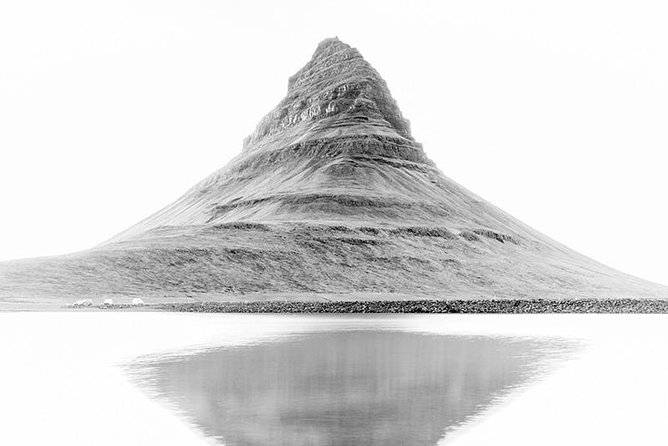
Lóndrangar consists of two tall basalt pinnacles rising above the southern coast. They are the remains of a larger volcanic crater that erosion has worn away.
The formations reach about 75 meters and provide a strong viewpoint over the coast. Seabirds, including northern fulmars and puffins, use the cliffs, although bird sightings depend on season, weather, and luck.
The stop lasts about 40 minutes. It is a good place to understand the peninsula’s volcanic structure because the rock is not just scenery. You can see how hard basalt remains while softer material around it disappears under wind, waves, and ice.
This area can feel very exposed. On a clear day, you get broad views over the coast. In poor conditions, high winds and low cloud can make the stop cold and limit what you see. Iceland’s weather is not a minor detail here. It can change the quality of the whole day.
Kirkjufell, the famous final image
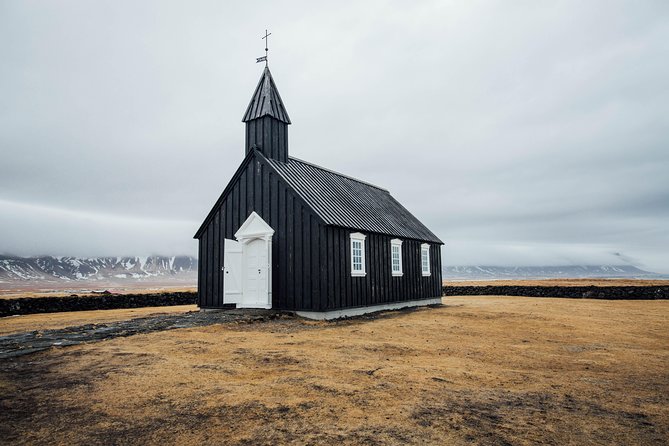
Kirkjufell is the most famous photograph on the route. Its narrow, distinctive shape has made it a symbol of Snæfellsnes, and its appearance as Arrowhead Mountain in Game of Thrones brought it even more attention.
The mountain was shaped by glacial erosion during the last ice age. You view it from outside rather than climb it, with about 40 minutes for photographs and a short look around.
On a clear day, Kirkjufell is a powerful finish. The shape is unusual enough to look almost designed, and the surrounding scenery helps explain why it has become one of Iceland’s most photographed sights.
Cloud can erase the mountain. One departure reached the stop in heavy cloud and snow and could not see the peak at all. That is not a fault in the route, but it is a real reason to keep your expectations flexible. The peninsula can be beautiful even when its most famous mountain is hidden.
What the minibus day feels like
The group limit is 18 people, and the vehicle is smaller than a standard coach. That helps the guide speak with the group and makes loading and unloading faster. It also means you are not managing a bus full of dozens of people.
The downside appears on a full departure, especially during the return to Reykjavík. After ten or twelve hours, a crowded minibus can feel warm or cramped. One departure also had a problem with excessive heating, while another was praised for a clean bus and careful breaks. Comfort can vary with the vehicle, weather, and guide.
The drive is part of the experience. Guides have used the road time to explain Icelandic culture, geography, local life, and saga stories. Hilde, Thora, Max, Siggy, Corina, Oskar, and other guides have led different departures, so the exact style will vary. Some guides are lively storytellers, while others speak less and let the scenery do more of the work.
You should bring water, snacks, and a phone charger. Food and drinks are not included, and there is no promise of a full meal stop in the supplied schedule. Bathroom breaks are built into the day, but you will still appreciate having your own supplies.
Weather, walking, and the best season for you
This tour requires good weather, and the route can be changed for safety. High winds, snow, poor visibility, and icy paths can affect what you see. A guide may skip a viewpoint or crater area if conditions make it unsafe.
Dress for exposure rather than for Reykjavík’s city streets. A waterproof jacket, warm layers, gloves, and sturdy shoes are sensible year-round. The coast can feel much colder than the temperature suggests because of wind.
You should be comfortable walking on uneven ground. Arnarstapi offers an easier coastal path, but the route also includes rocky descents and beaches. If you have bad knees, poor balance, or trouble walking downhill, ask the provider about current conditions before booking.
The tour is a good fit if you have only a few days in Iceland and want to see a wide range of western scenery without driving. It is less suitable if you want long hikes, flexible meal times, or a relaxed pace at each site.
Is $163.26 good value?
At $163.26, you are paying for convenience as much as admission, since the outdoor stops do not require separate entry tickets. The cost includes pickup and drop-off from designated Reykjavík locations, an English-speaking driver-guide, live commentary, and WiFi.
The day lasts about 12 hours, so the hourly cost is reasonable for a full peninsula circuit. You also avoid fuel, parking, navigation, and the stress of driving in fast-changing weather.
The value drops if you dislike organized schedules or find long vehicle rides tiring. You may get only 40 minutes at a stop that deserves more time, and you cannot wait indefinitely for the perfect light at Kirkjufell. For a first visit or a short stay, though, the number of major sights covered is strong.
The tour has a 4.6 rating from 571 reviews and is recommended by 91 percent of customers. Those figures suggest a reliable experience overall, but they do not remove the main variables: weather, vehicle comfort, guide style, and whether seals or Kirkjufell appear on the day.
Should you book this Snæfellsnes tour?
Book it if you want maximum scenery in one day, prefer not to drive, and can handle a long schedule with some uneven walking. You will see famous places, quieter coastal sites, and several sides of Iceland’s volcanic character.
Skip it if you want a slow day, dislike minibuses, or need guaranteed wildlife and clear mountain views. If you do book, arrive early for pickup, pack food and warm waterproof clothing, bring binoculars, and accept that weather may change the route.
You can cancel for a full refund up to 24 hours before the start time. If poor weather forces cancellation, you are offered another date or a full refund. That flexibility is useful for an exposed coastal trip where conditions matter so much.
FAQ
How long is the Snæfellsnes Peninsula tour?
The tour lasts approximately 12 hours, with pickup beginning at 8 a.m. Actual return time can vary with traffic, weather, and the day’s route.
Where does pickup take place?
Pickup is offered from your Reykjavík accommodation or the closest designated bus stop. Some downtown hotels cannot receive tour buses, so you may need to walk a few minutes to a bus stop.
Is airport pickup available?
No. Pickup from Keflavík Airport or locations outside the greater capital area is not available.
How many people are in the group?
The tour has a maximum of 18 travelers and uses a small bus or minibus.
Is the tour offered in English?
Yes. An English-speaking driver-guide provides live commentary during the trip.
Are meals and drinks included?
No. Food and drinks are not included unless specifically stated. Bring light snacks and your own drinks.
Will I definitely see seals at Ytri Tunga?
No. Ytri Tunga is known for its seal colony, but sightings are not guaranteed. Binoculars or a long camera lens can help you spot seals at a distance.
Do I climb Kirkjufell?
No. Kirkjufell is visited as a scenic and photography stop. Cloud or snow can hide the mountain.
Is the tour suitable for people with limited mobility?
Most people can participate, but some stops include rocky or downhill paths. Djúpalónssandur can be challenging in snow or ice, while the coastal path at Arnarstapi is easier.
What happens if bad weather cancels the tour?
You are offered a different date or a full refund if the experience is canceled because of poor weather. You can also cancel for a full refund up to 24 hours before the start time.
Just added in Iceland
- 2-Day South Coast, Blue Ice Cave, Glacier Lagoon Tour★ 5.0 · 4 reviews
- From Akureyri Port: Goðafoss Waterfall & Forest Lagoon Tour★ 4.7 · 79 reviews
- 8-Day Iceland Ring Road Tour: Reykjavik, Akureyri, Golden Circle & South Coast★ 4.5 · 81 reviews
- Grundarfjörður: Mt. Kirkjufell Daytime Kayaking Adventure★ 4.8 · 170 reviews
- Helicopter Tour with Mountain Summit Landing from Reykjavik★ 5.0 · 243 reviews
- 1-Hour Helicopter Tour in Iceland: The Geothermal Tour★ 4.9 · 263 reviews
- Magical Whales in the Midnight Sun | from Reykjavik★ 4.5 · 91 reviews
- Hellisheiði Geothermal Exhibition: Entry and Audio Tour★ 4.6 · 88 reviews